Blue Lotus Flower | Nymphaea Caerulea
Price range: $9.99 through $69.99
The sacred Egyptian water lily, revered for over three thousand years. Our Blue Lotus (Nymphaea caerulea) is dried whole flower, hand-selected for color and aroma, and ready for tea, ritual, incense, or aromatic use. Soft, floral, and storied.
Description
Blue Lotus Flower (Nymphaea Caerulea)
The sacred Egyptian water lily. Beautiful, storied, and one of the oldest ceremonial plants on earth.
Few plants carry the weight of Blue Lotus. For more than three thousand years, this slender blue water lily has shown up in temple carvings, tomb paintings, papyri, and ritual scenes across ancient Egypt. The pharaohs revered it. Priests used it in ceremony. The Book of the Dead references it. Walk through almost any Egyptian art exhibit and you’ll see it before you know what you’re looking at, those soft star-shaped petals tucked into a god’s hand or floating beside a sacred scene.
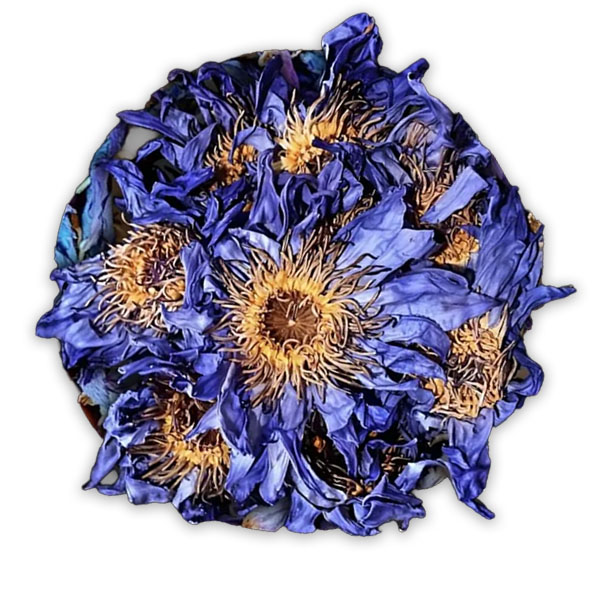
What we offer is the dried, whole flower of Nymphaea caerulea, the true Egyptian Blue Lotus, sourced for quality, color, and aroma. The petals are a soft blue-violet, sometimes leaning more lavender depending on the harvest, and they release a delicate, slightly sweet floral aroma when steeped or warmed. This is the ceremonial herb, dried and stored properly so it shows up to you the way it should: intact, fragrant, and ready for whatever tradition or use you have in mind.
A Brief History of a Sacred Flower
Blue Lotus grew along the Nile and across warm shallow waters in northern Africa, opening its petals at sunrise and closing them again at dusk, a daily rhythm the Egyptians read as a symbol of rebirth and the sun cycle. It was associated with the sun god Ra, with creation myths, and with the afterlife. The flower appears in countless tomb scenes, often steeped in wine or oil, often held to the nose, often woven into garlands.
Beyond Egypt, similar reverence shows up in other ancient cultures. In Ayurvedic tradition, water lilies in the Nymphaea family have been used for their calming and balancing qualities for centuries. The plant traveled, and the reverence traveled with it.
Today, people seek out Blue Lotus for the same reasons humans have always sought it out: the beauty of the bloom, the history that comes with it, and the soft, contemplative quality of the dried flower itself.
What Blue Lotus Is Like
The dried petals carry a subtle, sweet-floral aroma, with a faint honey note and a hint of green herb underneath. It’s a quiet fragrance, not a heavy one. When steeped in hot water, the flower releases a pale gold, slightly violet-tinged tea with a delicate, slightly earthy floral flavor that pairs well with a touch of honey. Some people brew it on its own, some blend it with chamomile, lavender, rose, or mugwort to round out the cup.
Used as an aromatic, the dried flower also works in incense blends, sachets, ritual offerings, bath soaks, and oil infusions. The aroma is gentle enough to layer with other botanicals without overpowering them.
What’s Actually In It
Blue Lotus contains a unique mix of plant compounds that have drawn researchers in the same way the flower has drawn people for thousands of years. The two most discussed are nuciferine and apomorphine, both alkaloids that occur naturally in Nymphaea caerulea. Beyond those, the flower contains flavonoids, phytosterols, antioxidants, and a wide range of other secondary metabolites that scientists are still working to fully catalog.
We share this for educational context, not as a health claim. Research on Blue Lotus is still in early stages, and the FDA has not evaluated or approved this plant for any medical use. We’ll talk more about that in the safety section below.
Common Traditional Uses
Across cultures and centuries, Blue Lotus has been used in a few consistent ways. We share these for historical and educational context, not as recommendations or medical advice.
- As a tea or infusion, often steeped alone or blended with other calming herbs, traditionally enjoyed in the evening for relaxation and reflection
- As an aromatic and incense ingredient, used in ceremony, meditation, and sacred space practice
- As a ritual or ceremonial offering, especially in traditions that draw from ancient Egyptian or Ayurvedic lineages
- In bath soaks and oil infusions, valued for the soft floral aroma and the symbolism of the flower itself
- As a botanical for collectors, displayed dried for its beauty and historical significance
How you choose to engage with Blue Lotus is up to you and your own traditions.
How to Brew Blue Lotus Tea
A simple starting point. Use roughly one teaspoon to one tablespoon of dried Blue Lotus petals per cup of hot water (just under boiling, around 200°F). Steep for 5 to 10 minutes, longer for a stronger infusion. Strain and enjoy plain, with honey, or blended with other calming herbs like chamomile, rose, or lavender. Some people prefer to steep the whole flower; others gently break the petals first to release more of the aroma.
Start with a small cup the first time you try any new herb so you can learn how your body responds.
Quality and Storage
The Blue Lotus we carry is dried whole flower, sourced for color, aroma, and intact petal structure. The flowers ship in resealable packaging to protect against moisture, light, and air, the four enemies of any dried botanical. For best longevity, store the flowers in an airtight container in a cool, dark place. Properly stored, dried Blue Lotus holds its color and aroma for a year or more.
Safety and Legal Information
Blue Lotus (Nymphaea caerulea) is legal to purchase and possess in most of the United States, but it has not been approved by the FDA for human consumption. We sell Blue Lotus as a dried botanical and herbal specimen for traditional, ceremonial, aromatic, and educational use.
This product has not been evaluated by the Food and Drug Administration and is not intended to diagnose, treat, cure, or prevent any disease. We make no medical claims about Blue Lotus.
If you are pregnant, nursing, taking medication, or managing a health condition, consult your doctor before consuming any new herb. Do not combine Blue Lotus with alcohol or psychoactive substances. Do not use Blue Lotus and operate a vehicle or heavy machinery. Some people are sensitive to plant alkaloids and may experience nausea, dizziness, or other reactions; if anything feels off, stop use and seek medical attention if needed.
State and local laws can differ. A small number of jurisdictions, including Louisiana, restrict the sale of certain plants for human consumption. Please check the laws in your area before purchasing.
Blue Lotus Quick Facts
- Botanical name: Nymphaea caerulea (sometimes listed as Nymphaea nouchali var. caerulea)
- Common names: Blue Lotus, Egyptian Lotus, Sacred Blue Lily, Blue Water Lily
- Origin: Native to the Nile region of Egypt and parts of Africa, now grown in warm regions worldwide
- Form: Dried whole flowers
- Aroma: Soft, sweet floral with subtle honey and green herb notes
- Common traditional uses: Tea, aromatic incense, ritual and ceremonial use, bath soaks, oil infusions
- Key compounds: Nuciferine, apomorphine, flavonoids, phytosterols, antioxidants
- Storage: Airtight container, cool and dark, away from moisture and light
- Available sizes: [insert sizes]
Frequently Asked Questions About Blue Lotus
What is Blue Lotus flower?
Blue Lotus, scientifically known as Nymphaea caerulea, is a sacred water lily native to Egypt and parts of Africa. It has been used for over three thousand years in ceremonial, spiritual, and traditional herbal practices, particularly in ancient Egyptian culture, where it appears in tomb paintings, papyri, and religious art.
What does Blue Lotus tea taste like?
Blue Lotus tea has a delicate, lightly floral flavor with subtle honey and earthy notes. The brew is pale gold with a slight violet tint, and it pairs well with honey or blends like chamomile, rose, and lavender.
How do you make Blue Lotus tea?
Steep one teaspoon to one tablespoon of dried Blue Lotus petals in hot water (around 200°F) for 5 to 10 minutes. Strain and enjoy plain or sweetened. Longer steeps produce a stronger infusion and a deeper aroma.
What compounds are in Blue Lotus flower?
Blue Lotus contains naturally occurring plant alkaloids, including nuciferine and apomorphine, along with flavonoids, phytosterols, and antioxidant compounds. Research on the plant’s full chemistry is ongoing.
Is Blue Lotus legal in the United States?
Yes, Blue Lotus is legal to purchase and possess in most of the United States. However, the FDA has not approved Blue Lotus for human consumption, and it is sold as a dried botanical for traditional, ceremonial, and aromatic use. A small number of states and localities restrict its sale; always check the laws in your area.
Has Blue Lotus been approved by the FDA?
No. Blue Lotus has not been evaluated or approved by the Food and Drug Administration. It is not intended to diagnose, treat, cure, or prevent any disease.
How should I store Blue Lotus flowers?
Store dried Blue Lotus in an airtight container in a cool, dark place, away from moisture, heat, and direct light. Properly stored, the flowers retain their color and aroma for a year or more.
Can I combine Blue Lotus with other herbs?
Yes. Blue Lotus is commonly blended with chamomile, lavender, rose, mugwort, and other calming or aromatic herbs in tea blends, bath soaks, and incense. Its delicate floral aroma layers well without overpowering other ingredients.
Additional information
| Weight | 1 oz, 1/4 lb, 1/2 lb |
|---|
Related products
-
- Natural Herbs
Organic Oregano Leaf
- Price range: $2.79 through $21.99
- Select options This product has multiple variants. The options may be chosen on the product page
-
- Natural Herbs
Organic Fennel Seed
- Price range: $1.49 through $10.99
- Select options This product has multiple variants. The options may be chosen on the product page
-
- Natural Herbs
Organic Licorice Root
- Price range: $2.15 through $15.99
- Select options This product has multiple variants. The options may be chosen on the product page
-
- Natural Herbs
Organic Bladderwrack Powder
- Price range: $2.89 through $21.99
- Select options This product has multiple variants. The options may be chosen on the product page
Reviews
There are no reviews yet.