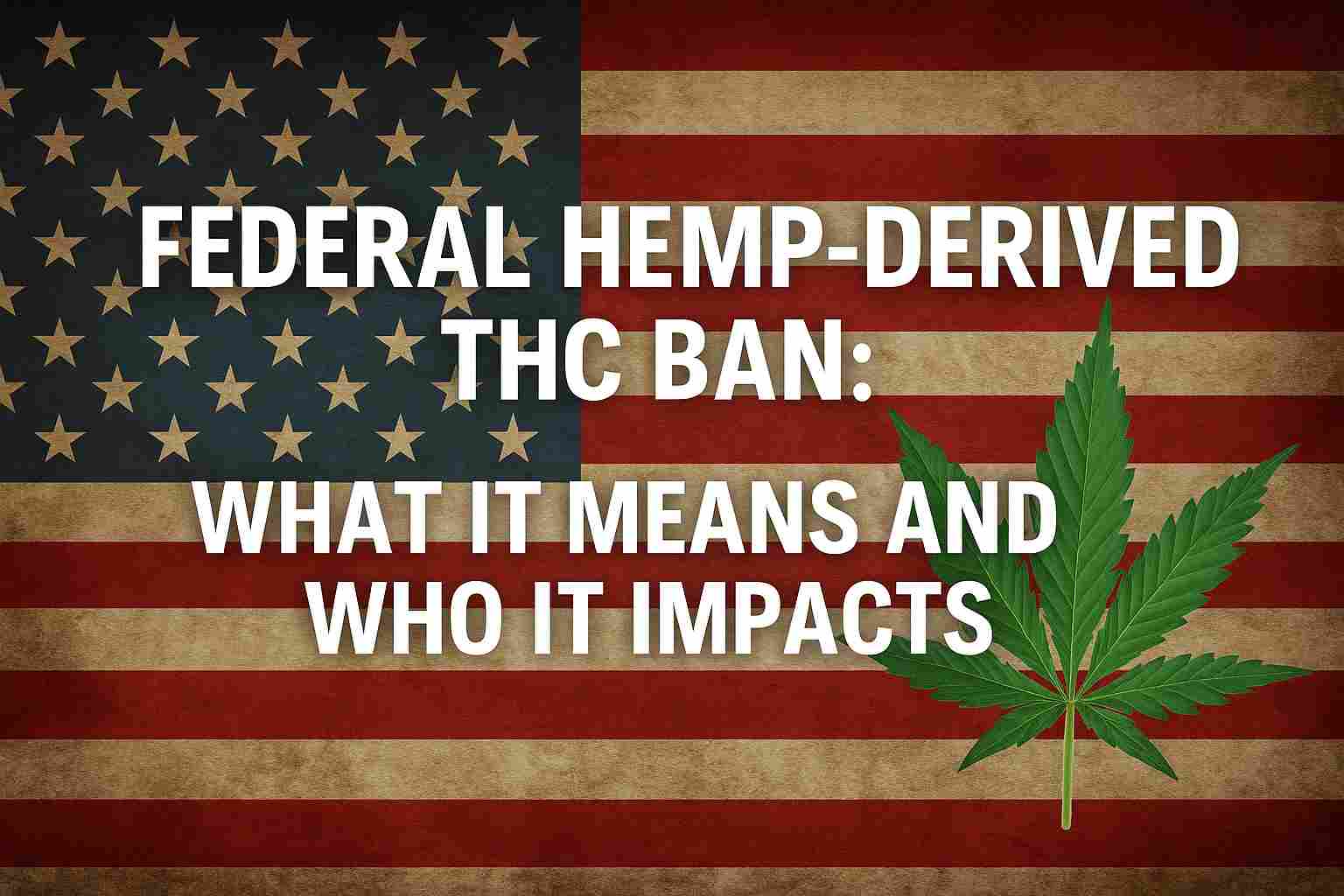
Late on November 12, 2025, President Donald Trump signed into law a federal ban on most hemp-derived THC products. This sweeping change came tucked into a must-pass government funding bill aimed at ending a lengthy shutdown. The ban effectively redefines “hemp” to close loopholes from the 2018 Farm Bill, outlawing the many THC-infused gummies, drinks, vapes, and other products that hemp businesses have been selling outside of state-regulated marijuana systems. In this expansion of our earlier report, we’ll break down the numbers behind the ban’s impact, highlight what key supporters and opponents are saying, share insights from industry groups, and discuss how consumers are responding. Our goal is to deepen clarity around this issue and empower you with knowledge to take informed action.
How Big Is the Impact? (The Industry by the Numbers)
The hemp-derived products market isn’t just a niche corner of cannabis—it’s a multi-billion-dollar industry serving millions of consumers across the country. By the hemp industry’s own estimates, these new restrictions threaten to wipe out roughly 95% of hemp product businesses nationwide, potentially dismantling an industry valued at about $28–30 billion in annual revenue. The U.S. Hemp Roundtable, a leading industry advocacy group, warns that more than 300,000 American jobs are at risk. They also project states could lose around $1.5 billion in tax revenue previously generated by hemp sales once these products are pulled off shelves. These staggering statistics underscore that this isn’t a minor tweak—it’s a near-complete shutdown of a booming sector that sprang up in the years since hemp was federally legalized.
To put it in perspective, hemp-derived cannabinoids have become a substantial retail segment in many states. For example, Minnesota’s hemp THC edibles and beverages were a $140 million market last year, even being sold in mainstream outlets like Target’s liquor stores. Nationwide, hundreds of small businesses (from local CBD shops to breweries and even gas stations) have built product lines around legal hemp THC. Major retailers like convenience store chains and beverage distributors also jumped on board as consumer demand grew for these “light” THC options outside of licensed marijuana dispensaries. All of that is now in jeopardy. Industry observers predict that if the ban proceeds unchanged, most of these products will have to be discontinued or destroyed within the next year. Many hemp farms and processors would have no viable market for their crops aside from the non-intoxicating uses (fiber, grain, etc.), and countless brands of delta-8 gummies, hemp-derived delta-9 drinks, THC-O vapes, and even full-spectrum CBD oils could vanish from store shelves.
Importantly, this ban doesn’t just target a fringe of intoxicating products—it also sweeps up everyday wellness products. Under the new law, any hemp product containing more than 0.4 milligrams of total THC per container will be illegal. That’s an extremely low threshold (effectively zero THC), which means even many non-intoxicating CBD oils, tinctures, and capsules would fail to comply. (For example, a typical full-spectrum CBD supplement often contains trace THC slightly above 0.4 mg in an entire bottle.) The Roundtable notes that over 90% of hemp CBD products on the market today exceed that 0.4 mg THC cap, despite being used purely for therapeutic benefits and not to get “high.” In other words, millions of consumers – including seniors, veterans, and patients who rely on legal CBD for pain, sleep, or anxiety relief – could lose access to products they’ve depended on. They would technically be violating federal law by buying their usual hemp supplements, potentially forcing them to seek pricier or less familiar alternatives (or even consider medical cannabis programs, which not everyone has access to). The scale of disruption is massive, touching everyone from farmers and formulators to corner-store clerks and customers looking for a mild relaxant instead of a beer or a pharmaceutical.
What Supporters of the Ban Are Saying (Safety, Loopholes, and “Kids at Risk”)
Why did this ban gain traction in Congress? Key supporters of the measure frame it as a long-overdue safety regulation. They argue that certain companies have been exploiting a loophole in hemp law to sell unregulated, psychoactive THC products under the guise of “hemp,” posing risks to public health – especially for children. Here are some of the main points and public statements from proponents:
- Closing the 2018 Farm Bill Loophole: Senate Minority Leader Mitch McConnell (R-KY), who ironically championed hemp legalization in 2018, insists that bad actors turned that law into an unintended “loophole”. He points out that while hemp was meant for rope, textiles, CBD wellness supplements, etc., some businesses started chemically extracting or converting legal hemp cannabinoids into potent THC variants (like delta-8, delta-10, and THC-O). “Unfortunately, companies [take] legal amounts of THC from hemp and [turn] it into intoxicating substances,” McConnell said on the Senate floor, describing how these products are then marketed in “candy-like packaging” and sold in “easily accessible places like gas stations”. To supporters, this free-for-all environment is unacceptable because these hemp edibles and vapes bypass the strict safety regulations that apply to state-licensed marijuana. The ban’s backers say any intoxicating THC product should be regulated like marijuana – or not sold at all – rather than being sold widely with no oversight.
- Protecting Children and Public Safety: Rep. Andy Harris (R-MD), who led the charge in the House, has been vocally concerned about how hemp THC products appeal to minors. On the House floor, Harris argued that closing the hemp loophole will stop “the spread of unregulated, intoxicating hemp products” that are being sold “online and in gas stations and corner stores across the country.” He emphasized, “Many of these products are accessible and attractive to children.” This sentiment was echoed by a coalition of 39 state attorneys general – the top legal officers from states ranging from Arkansas to New York – who wrote Congress urging action. In stark language, those AGs warned that some manufacturers are creating “Frankenstein THC products” out of legal hemp, which can be “more intoxicating than marijuana” and have allegedly harmed kids through accidental ingestions. They pointed to incidents of brightly-packaged delta-8 THC gummies that resembled actual candy, saying it’s “easy to see how a child will confuse this product with real candy and eat a few gummy bears,” potentially leading to hospitalization. Supporters cite reports of rising poison control calls and ER visits linked to these hemp-derived edibles in places like Texas, suggesting an urgent public safety issue.
- Uniformity and Law Enforcement: Pro-ban lawmakers also argue that a patchwork of differing state hemp rules isn’t working. Over a dozen states had already outlawed or limited delta-8 and similar products, while others set age limits or potency caps. This mismatch made enforcement tricky – banned products could still leak in from more permissive states or online sales. By redefining hemp at the federal level, Congress is essentially overriding state-by-state variances and setting one clear (albeit strict) standard nationwide. “Clear direction from Congress is needed to shut down this industry before it metastasizes further,” the 39 AGs wrote. Their view is that only a federal fix can truly put the genie back in the bottle and assist law enforcement who have struggled to differentiate legal hemp shipments from illegal cannabis.
- Support from Established Industries: It wasn’t just politicians and prosecutors lobbying for this ban. Major industry lobbies threw their weight behind it as well – notably from the alcohol and regulated marijuana sectors, which have felt threatened by hemp-derived THC. Large, licensed cannabis companies (the ones who must obey strict state regulations and taxes to sell Delta-9 THC) have long complained that hemp retailers are undercutting them with similar psychoactive products that didn’t exist when the rules were written. Some of these cannabis businesses see the ban as leveling the playing field. For example, one multi-state marijuana operator’s executive cheered that “the regulated cannabis industry can now get back to normalizing cannabis without all the bad actors…taking advantage of the Farm Bill loophole.” Similarly, parts of Big Alcohol openly supported the crackdown. The American Distilled Spirits Alliance and certain alcohol trade groups backed closing the hemp THC market, in part because hemp drinks were starting to nibble at alcohol’s market share. (There’s evidence that some adults have been swapping beers for THC seltzers, contributing to a slight decline in alcohol consumption – a trend that naturally concerns liquor manufacturers.)
- “Protecting Legitimate Hemp” – or So They Claim: Interestingly, supporters like Sen. McConnell insist that genuine non-intoxicating hemp farming won’t be harmed. McConnell’s office has stated that under this law, farmers can still grow hemp for fiber, grain, or even CBD extraction – as long as the final products are essentially THC-free. They frame it as carving out the “bad” THC products while supposedly allowing “good” uses of hemp (like making rope, clothing, hemp seed oil, and FDA-approved CBD drug trials) to continue. However, critics vehemently disagree that this line is so clear – more on that below.
In summary, the coalition supporting the ban portrays it as a public safety measure: shutting down what they see as an unregulated, sometimes dangerous gray market that undermined both the law and legitimate industries. They talk about reining in “intoxicating hemp” to protect kids, consumers, and the integrity of legal markets. And politically, it became part of the price to pay to reopen the government, with proponents seizing the must-pass moment to get it through.
Why Many Are Pushing Back (Opponents’ Concerns and Warnings)
On the other side of the debate, a diverse array of opponents – from libertarian-leaning Republicans to progressive Democrats, from hemp industry leaders to everyday consumers – have been ringing alarm bells about this ban. They argue it’s an extreme overreaction that will devastate small businesses, farmers, and consumers without actually solving the underlying issues. Here are some key voices and their arguments against the ban:
- “This Is Prohibition 2.0” – Sen. Rand Paul (R-KY): One of the loudest critics has been Senator Rand Paul, who hails from Kentucky, a state with deep hemp roots. In Paul’s view, the federal government is essentially resurrecting cannabis prohibition, but now targeting hemp. “We have been willing to negotiate to get rid of the bad actors,” Paul said, referring to efforts to impose reasonable regulations instead. “And yet instead we are met with legislation that would be prohibition.” He didn’t mince words about the impact on his state’s farmers either, warning on the Senate floor that the bill “makes the hemp industry kaput.” Paul painted a dire picture: “Every hemp seed in the country will have to be destroyed,” and “this is the most thoughtless, ignorant proposal to an industry that I’ve seen in a long, long time.” In other words, he feels the ban is a blunt instrument – punishing the entire industry for the misdeeds of a few bad actors – and that it betrays the promises made to farmers when hemp was legalized.
- Other Lawmakers Opposed (A Bipartisan Minority): Rand Paul wasn’t alone. In fact, when an amendment was introduced to strip the hemp ban from the bill, 22 U.S. Senate Democrats and even Senator Ted Cruz (R-TX) joined Paul in supporting that effort. (It’s worth noting how unusual that alliance is – Cruz is typically no fan of marijuana, but he objected to this ban on hemp products, likely on free-market or states’ rights grounds.) That amendment ultimately failed as Senate leadership pushed the overall funding deal through, but it showed a significant minority had concerns. Over in the House, Congressman Thomas Massie (R-KY) tried a similar amendment to remove the ban language, and at least a dozen House Republicans (including Kentucky Reps. James Comer, Andy Barr, and others from states like North Carolina) signaled opposition to the hemp crackdown. Massie said he “detests the tactics” of slipping this provision into a must-pass bill at the last minute. Meanwhile, many Democrats in Congress also opposed the ban on principle, though some voted for the package to avert the shutdown. In late September, a bipartisan group of 35 members of Congress even sent letters to House and Senate leaders urging them to oppose the “hemp-killing” provision and instead pursue a proper regulatory framework. “Rushing into a misguided ban on hemp,” their letter warned, “would negatively impact every sector of the industry… [and] arbitrarily redefine legal hemp.” In the Senate, cannabis reform champions like Ron Wyden and Jeff Merkley (both D-Oregon) wrote their own letter urging colleagues to drop the ban and work on “common-sense safeguards” instead of a one-size-fits-all prohibition.
- Hemp Industry Leaders: “Don’t Erase Us—Regulate Us.” Those actually growing and selling hemp products feel blindsided and betrayed. Jonathan Miller, general counsel for the U.S. Hemp Roundtable (and a former Kentucky State Treasurer), has been very vocal. He argues that Congress is effectively outlawing an entire industry that they themselves encouraged just a few years ago. Miller points out that Kentucky – ironically McConnell’s home state – is “ground zero for the rebirth of hemp” in America, with many family farms and startups investing in it since 2018. Now those livelihoods are at stake. “If sweeping restrictions move forward, it won’t be the bad actors who disappear,” warns Jammie Treadwell, CEO of a Florida-based hemp company. “Instead… the industry will just crumble overnight,” with responsible operators forced out while possibly “a dangerous black market” rushes in to fill consumer demand. The consistent plea from industry folks is: don’t ban these products, regulate them. They acknowledge issues with inconsistent quality or marketing, but suggest solutions like age limits, potency caps, lab testing, proper labeling and packaging standards, and clear distinction between intoxicating vs. non-intoxicating products. In fact, some states (like Minnesota and Kentucky) have already passed robust hemp safety regulations – proving that a middle ground is possible. By folding hemp-derived THC into a regulated framework (similar to state cannabis laws or akin to alcohol rules), opponents say we could address safety and youth access without wiping out entrepreneurs and ceding everything to illicit street sellers.
- Impact on Wellness Consumers and Patients: Another major concern is how this ban hurts ordinary consumers who were acting in good faith. Consider the many older adults or veterans dealing with chronic pain, anxiety, or insomnia who found relief in hemp-derived CBD or mild THC edibles. These are people who “would never rip a bong,” as one cannabis attorney quipped, but felt comfortable with a low-dose hemp gummy or a THC-infused seltzer at the end of the day. They deliberately avoided the “real” marijuana dispensaries – perhaps for legal reasons, or stigma, or lack of access in their state – and instead chose hemp products that were legal federally and sold at local wellness shops. Opponents argue that these folks are now being punished too. Paul Murdoch, a hemp farmer in Oregon who produces CBD oils, shared that “CBD has been a lifesaver for me and many others” after a severe injury, helping people wean off opioids or manage health issues. “And that may go away,” he lamented, because the ban doesn’t cleanly exempt most full-spectrum CBD products. In a similar vein, NORML (National Organization for Reform of Marijuana Laws) points out that the root cause of the delta-8 craze was the ongoing federal prohibition of cannabis itself. Consumers only turned to semi-synthetic hemp THC alternatives because they couldn’t legally get the real thing in many places. NORML’s Deputy Director Paul Armentano argues that if Congress truly wants to protect consumers, the smarter approach would be to legalize and regulate cannabis broadly – providing safe, tested, affordable options – rather than drive people to substitutes or the black market. This perspective basically says: the hemp “loophole” existed because of demand for legal cannabis products; shutting it down without legalizing marijuana is shortsighted.
- States’ Rights and Overreach: Some officials also view the ban as a federal overreach that stomps on states that crafted their own hemp rules. As a libertarian-leaning stance, figures like Massie and others note that many states already put age 21 limits, licensing requirements, or even their own bans on delta-8 and friends. Those that didn’t (often more agricultural states or those waiting on Congress) might have intentionally allowed a hemp market to flourish. The new law basically nullifies any state’s hemp THC program (for instance, Minnesota’s pioneering edible law) by making the products federally illegal. Even Minnesota’s Attorney General, Keith Ellison – who signed the AG letter supporting action – later clarified he thought states with strong regulations should have been carved out. To opponents, the one-size-fits-all ban undermines state sovereignty and ignores that states are capable of managing these products. They argue enforcement of problematic products could have been handled through existing laws (e.g., targeting those selling high-THC as “marijuana without a license” or enforcing consumer protection standards) rather than asking the Feds to drop the hammer.
In short, the opposition narrative is that this ban is too extreme and counterproductive. They don’t deny there were issues to fix, but believe Congress chose the nuclear option. By doing so, they foresee shuttered businesses, farmers burning hemp crops, consumers losing safe options, and the likely rise of underground markets or even more synthetic drugs of unknown safety to fill the void. It’s a classic debate of regulation vs. prohibition – and opponents believe prohibition will cause more harm than good.
Insights from Industry and Advocacy Groups
Beyond individual politicians and companies, various organizations have weighed in on the hemp ban with nuanced perspectives:
- U.S. Hemp Roundtable: This is the leading national hemp advocacy group, representing dozens of hemp companies and grassroots organizations. The Roundtable has been unequivocal in opposing the ban. In a stern statement, they said Congress’s move “threatens to eliminate America’s $28.4 billion hemp industry and jeopardizes more than 300,000 American jobs.” The group highlighted that the ban’s THC limit (0.4 mg) is so low it would “wipe out 95% of the industry,” shuttering countless small businesses and farms. They also debunk the notion that CBD products are protected – noting that “the large majority of nonintoxicating CBD products on the marketplace feature more than 0.4 mg of THC per container,” meaning even wellness items are ensnared. Jonathan Miller of the Roundtable has been actively lobbying for an alternative approach. He emphasizes that the hemp sector wants safety regulations – just not an outright ban. The Roundtable supports measures like age restrictions (21+), child-proof packaging, potency labeling, and banning truly synthetic cannabinoids that don’t occur in nature. They argue these steps would eliminate bad actors (like those making high-potency THC acetate or mislabeling products) while preserving legitimate businesses. A telling quote from Miller: “Our industry is being used as a pawn as leaders work to reopen the government. Recriminalizing hemp will force American farms and businesses to close and disrupt the wellbeing of countless Americans who depend on hemp.” The Roundtable has vowed that “the fight is far from over” – during the 365-day delay before the ban takes effect, they plan to lobby Congress intensely for a more reasonable, science-based regulatory framework to replace this prohibition.
- NORML and Cannabis Advocacy Groups: Traditional cannabis reform organizations have a slightly complicated stance. Many legalization advocates are sympathetic to hemp entrepreneurs and consumers, yet they also recognize some hemp-derived products (especially synthetic concoctions) raised genuine health and safety flags. NORML’s position has been to urge comprehensive cannabis legalization as the real solution. Paul Armentano of NORML has commented that the proliferation of delta-8 THC and similar compounds is “a symptom of prohibition”. He suggests that if adults in all states had legal access to standard, regulated cannabis (the delta-9 THC in marijuana), there wouldn’t be such a market for hemp-derived imitators. NORML does caution consumers about untested novel cannabinoids, but they oppose a broad federal ban that criminalizes these products while marijuana itself remains illegal in many states – calling that outcome both ironic and harmful. Other national groups, like the Drug Policy Alliance or Marijuana Policy Project, similarly tend to advocate for regulation over bans. They are likely to use this development as another talking point for why federal cannabis reform is needed: otherwise, bans like this one will continue pushing consumers toward shady alternatives.
- American Trade Association for Cannabis and Hemp (ATACH): This is an organization that interestingly includes state-licensed marijuana companies. ATACH actually supported Congress closing the hemp loophole – reflecting the interests of their cannabis industry members. ATACH’s spokesperson, Chris Lindsey, argued that many intoxicating hemp products were contaminated or poor-quality (citing tests finding pesticides and heavy metals in some gas-station delta-8 items). He insists that “if it’s essentially marijuana, it should be regulated like marijuana” – meaning sold only in licensed dispensaries with all the testing and tracking that entails. ATACH thanked the Senate for addressing the “dangerous proliferation of unregulated synthetic THC products.” However, not every cannabis trade group feels celebratory; some worry that pushing these products underground without offering a legal alternative could backfire in terms of public health.
- Major Alcohol and Other Business Coalitions: As noted, big distilled spirits producers favored the ban, but beer and wine distributors largely did not. In fact, over 50 beverage distribution companies (who often handle both alcohol and non-alcohol drinks) wrote to Congress urging regulation instead of prohibition. They warned that an outright ban would simply drive THC drinks off the books and hurt stores and breweries who invested in that trend. This split within the alcohol industry shows that not everyone in “corporate America” wanted the hemp market destroyed – many prefer a path where it’s safely integrated and taxed (and where they can continue to make money from it). The same goes for some in the wellness and retail sector: companies that added CBD or hemp products to their shelves are concerned about losing that business and disappointing customers.
- Patient and Veteran Advocacy Groups: Although less in the media spotlight, you can imagine groups representing veterans or patients who use CBD likely have concerns. The ban’s effect on full-spectrum CBD (with traces of THC) could inadvertently restrict products like CBD oils for epilepsy or PTSD that some veterans swear by. Organizations like Americans for Safe Access, which focus on medical cannabis patients, have generally pushed for protecting access to all forms of cannabinoid therapies. We may see these groups advocating for exceptions or legislative fixes so that non-intoxicating therapeutic products remain available.
In summary, industry and advocacy voices largely agree: they prefer targeted regulation over a total ban. They highlight workable models (like Oregon, Colorado, Minnesota’s laws) that differentiate high-THC vs low-THC hemp products and impose testing and age limits accordingly. These voices are gearing up to use the next year to convince Congress (or perhaps a new Farm Bill) to replace the ban with a more sensible regulatory scheme. Whether they succeed will depend on political will and consumer outcry.
Consumer Response and Grassroots Efforts
For consumers who enjoy or depend on hemp-derived THC products, this news has been jarring – and many aren’t taking it quietly. In the days since the ban’s passage, there’s been a flurry of grassroots response:
- Petitions and Letter-Writing Campaigns: The U.S. Hemp Roundtable and other advocates launched online petitions rallying the public. Tens of thousands of people have already signed on to urge lawmakers to reconsider the ban. One petition specifically addressed to President Trump (before he signed the bill) highlighted the plight of “millions of seniors” using hemp CBD and pleaded for a veto or fix. Now that the bill is law, efforts are pivoting toward either pushing new legislation or encouraging the incoming regulations to be more flexible. Advocacy websites provided easy tools for consumers to email or call their members of Congress. In fact, the Roundtable reported they aimed to have 100,000 messages sent to Congress from constituents asking to “Save Hemp.” This kind of volume shows that ordinary Americans – not just businesses – care about this issue.
- Social Media Campaigns: On platforms like X (Twitter), Facebook, and Instagram, users have been spreading hashtags such as #SaveHemp, #StopTheBan, and #HempHelps. People are sharing personal testimonials: a veteran explaining how delta-8 gummies helped him quit opioids, or a mom describing how CBD oil calmed her child’s seizures – stories meant to put a human face on the products Congress lumped in with “dangerous intoxicants.” Some well-known figures have chimed in too. For example, actor Seth Rogen (a noted cannabis aficionado) tweeted criticism, saying the push to ban hemp THC drinks shows “someone is very threatened” by their popularity. The conversation online often points out the irony that marijuana remains federally illegal for adults, yet now even hemp alternatives are being banned – leaving consumers with few legal choices outside of certain state programs.
- Protests and Rallies: While national in scope, the ban’s impact is very local for shop owners and their patrons, and we’ve seen in-person protests in some areas. Earlier in 2025, when similar bans were debated at the state level, there were public rallies – for instance, in Alabama, protesters (including small hemp business owners and customers) gathered at the state capitol to oppose a bill that mirrored this federal crackdown. Now, with the federal law looming, hemp retailers in multiple states have organized community meetings and small demonstrations. Don’t picture anything on the scale of a huge march on Washington (at least not yet), but these local events show real people standing up for their livelihoods and choices. Imagine a dozen mom-and-pop CBD store owners handing out flyers in a town square, or farmers bringing hemp plants to a statehouse lawn in symbolic protest. It’s that kind of heartfelt, grassroots pushback happening in pockets around the country.
- Customer Outrage and Panic Buying: Many consumers are stocking up on their favorite hemp edibles or tinctures while they still can. Some stores have reported a surge in sales as news spreads that these items might be gone in a year. There’s also confusion – people are asking, “Will I be a criminal for owning delta-8 gummies now?” (For clarity: the law gives a 365-day grace period from enactment, so the ban won’t be enforced until late 2026. Products can still be sold in the meantime, but sellers know the clock is ticking on inventory.) Still, the fear of losing access has prompted customers to voice their concerns. It’s not uncommon to see comments on forums like “These CBD gummies help my arthritis more than anything else. How can they take them away?” Such sentiments may translate into political pressure if enough constituents raise the issue.
- Allies in Unusual Places: Interestingly, some parts of the alcohol industry – the distributors and local breweries – as mentioned, are siding with hemp consumers. In Minnesota, craft breweries that introduced THC-infused beverages have been speaking out. One brewery president lamented, “The rug just got pulled out from under us.” They worry about letting down customers who appreciated a low-dose THC beer alternative. This alliance between hemp consumers and certain businesses (even outside the cannabis space) could broaden the base of people pushing for change.
All this consumer and grassroots activity sends a clear message: there is a passionate constituency for hemp-derived products who won’t quietly accept this ban. They are writing, calling, tweeting, and even rallying to ensure their voices are heard. The situation is evolving, but if lawmakers start getting an earful from outraged voters or see communities mobilizing (think petitions delivered with stacks of signatures, local news covering a vape shop owner fighting to save her business), it could influence how this ultimately plays out.
What’s Next and How You Can Take Action
The hemp-derived THC ban is official, but the story isn’t necessarily over. There’s a built-in one-year delay before the ban’s provisions take effect – essentially a countdown now underway. During this period, several things could happen:
- Regulatory Clarifications: Federal agencies like the FDA and USDA have been tasked with fleshing out the details (e.g. compiling lists of which cannabinoids occur naturally in cannabis, etc.). It remains to be seen if regulators might interpret the law in a way that spares certain products or creates exceptions. For instance, will they explicitly exempt very low-THC full spectrum CBD oils used for health? Public comment periods or agency guidance could provide some nuance. Stakeholders will undoubtedly try to influence this process.
- Legislative Fixes: Lawmakers supportive of hemp are already exploring new bills to mitigate the damage. Senator Chris Van Hollen (D-MD) suggested that the one-year window “could provide an opportunity to advance legislation to create an alternative regulatory model for consumable hemp products.” In plain terms, Congress could pass a law before late 2026 that replaces the outright ban with a set of strict regulations (perhaps licensing hemp THC products similarly to alcohol or cannabis). Industry groups like Cornbread Hemp (a Kentucky hemp company) are optimistic, saying “we can get a bill through Congress next year before the deadline – it’s time for everybody to come together and focus on what we can get passed to remediate the worst of it.” This will likely be a tough battle, but not impossible if enough political support materializes. Keep an eye out for hearings or amendments related to hemp in upcoming agriculture or appropriations bills.
- Legal Challenges: It wouldn’t be surprising if some party files a lawsuit challenging the ban. Potential arguments could involve administrative procedure or even constitutional grounds (like an argument that it infringes on states’ rights or that Congress overstepped by effectively criminalizing products without a proper debate). While speculative, litigation could at least draw out the timeline or force clarifications, though banking on courts is uncertain.
- State-Level Responses: Some hemp-friendly states might seek creative ways to protect their in-state businesses. While federal law is supreme, a state might, for example, set up a state-regulated distribution system and argue that within their borders, as long as products don’t cross state lines, they have a right to allow it. (This would be legally risky because the new federal definition of hemp would still classify those products as illegal contraband, but states like Colorado or Oregon – which have robust systems – might lobby for a federal exemption for compliant states.) At minimum, expect states to voice their positions. Officials in states like Texas, Florida, and Ohio who wanted a crackdown will likely enforce the ban eagerly come 2026. Conversely, states like Minnesota or Kentucky that built hemp markets may lobby Congress for relief or at least support their constituencies through this transition.
So, what can you as a consumer or concerned citizen do in the meantime? Staying informed and engaged is key. Here are a few constructive actions:
- Reach Out to Your Representatives: Make your voice heard to the people who represent you. If you believe the ban goes too far, contact your U.S. House Representative and Senators to politely express your concern and what you’d like to see done (e.g., supporting a regulatory alternative or carving out CBD products). Personal stories go a long way – if a hemp product has helped you or your family, share that. Lawmakers do take note when a groundswell of constituents speak up on an issue. You can find the contact info for your state and federal elected officials easily (and even send an email or letter) by using tools like the official Find Your Elected Officials lookup. It provides names and contact pages for your governor, state legislators, and members of Congress. A quick phone call or email to their office can be as simple as: “I’m a voter in your district. I use legal hemp products for my well-being and I’m very concerned about the new ban. I urge you to support solutions that regulate these products safely rather than banning them.”
- Support Advocacy Groups: If you want to get more involved, consider aligning with organizations working on this issue. For example, the U.S. Hemp Roundtable (at HempSupporter.com) provides updates and action alerts – they often have templated letters you can send to Congress or petitions you can sign. Groups like NORML or Americans for Safe Access also campaign for sensible cannabis policies; joining their mailing lists can keep you in the loop and amplify the advocacy effort.
- Stay Updated and Spread Awareness: This topic is evolving, and misinformation can spread easily. Keep following credible news sources (we’ll continue to update at The Leafy Source) for developments on implementation or potential changes to the law. When you see a useful update, share it with friends or on social media. Many people still don’t realize their favorite delta-8 vape or CBD gummy might be illegal next year – a polite heads-up in your circles can rally more voices. By discussing the issue, you also help normalize the idea that hemp products are important to many everyday Americans, countering any narrative that it’s just about “stoners” or frivolous uses.
- Explore Alternatives (Carefully): In case the ban does proceed unchanged, consumers might eventually need to transition to other options. If you rely on hemp THC for relaxation or pain relief, you might research whether your state has a medical cannabis program or adult-use cannabis legalization that could serve your needs (legally). For CBD users, there may be THC-free formulations (broad-spectrum or isolate-based products) that remain legal and could be substituted, though many find those less effective. We know this is far from ideal – it’s part of why so many are fighting the ban – but it’s wise to have a plan B for your wellness regimen. Just be cautious: do not turn to unregulated online sources or “black market” vendors in the event of a ban, as product safety could be even worse there. Hopefully, either the law will change or reputable companies will innovate compliant products, but always prioritize your health and safety in whatever you consume.
Lastly, it’s worth emphasizing that your engagement as a consumer and citizen truly matters. The very inclusion of a delayed enactment (the one-year grace period) was influenced by stakeholders telling Congress how disruptive an immediate ban would be. That means lawmakers did hear and respond to some concerns, even if the outcome wasn’t what we hoped for. Going forward, if enough people voice how this affects their lives and communities, there’s a real possibility of moderating this policy. Change often happens when regular people speak up. Whether you’re a hemp business owner, a veteran who relies on CBD, or just someone who values personal freedom of choice, your perspective is important in this democratic process.
In conclusion, the federal hemp-derived THC ban represents a seismic shift that could upend an entire industry and leave consumers scrambling. We’ve expanded on the issue to show the full picture: huge economic stakes, passionate arguments on both sides, and a community rallying to make their voices heard. The Leafy Source will continue to monitor this developing story. In the meantime, stay informed, stay safe, and consider taking action if you feel strongly. The next year will be critical in determining whether this ban is the end of an era or the start of a new, more regulated chapter for hemp. As always, we aim to empower you with understanding so you can navigate the road ahead – and perhaps even help shape it.