

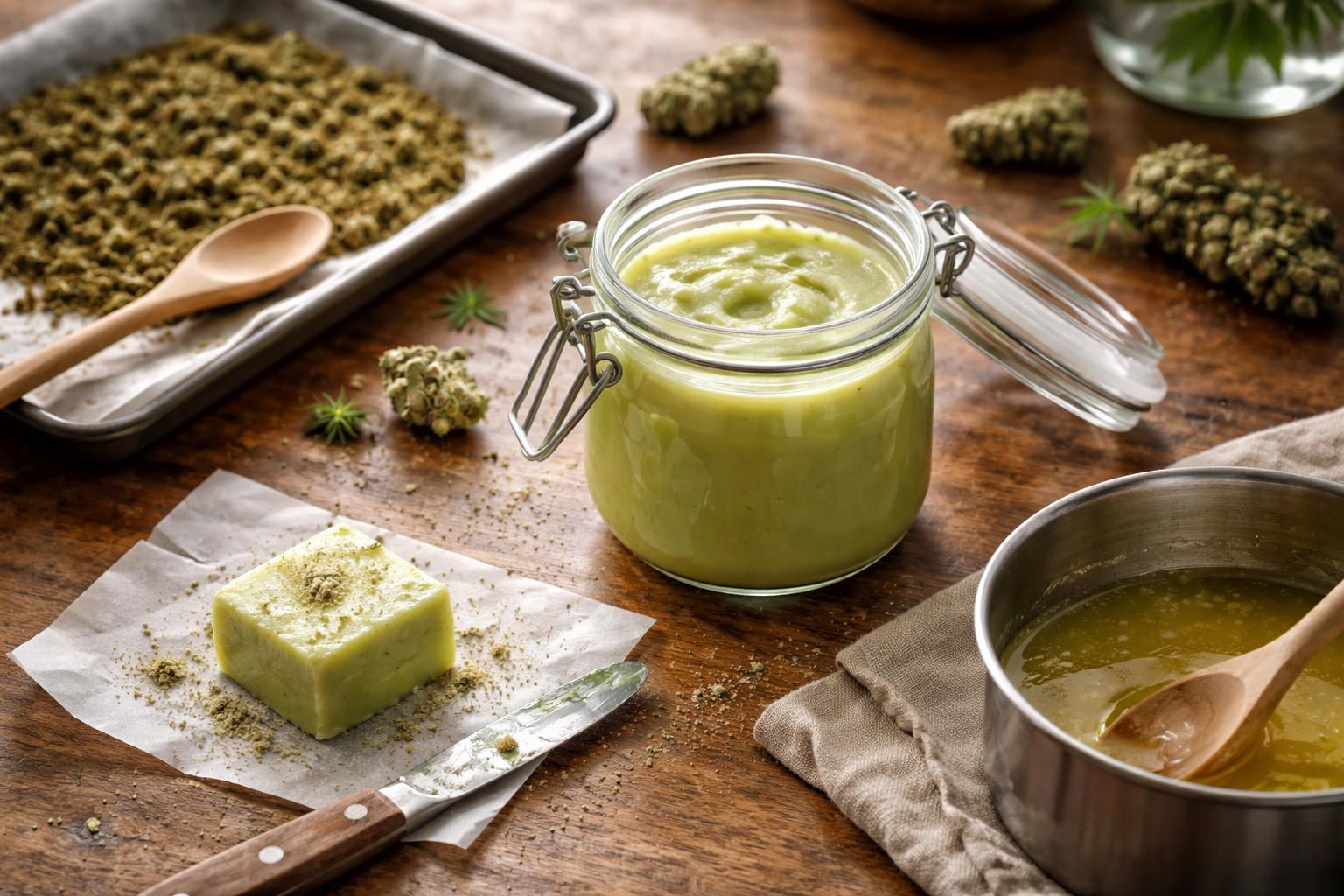
How to Make Cannabutter: A Step-by-Step Guide for Consistent, Flavorful Edibles
Well-made cannabutter is the backbone of reliable homemade edibles. Get the basics right and you will enjoy consistent potency, smooth flavor, and a butter that blends into anything from brownies to roasted veggies. In this guide, you will learn how to decarboxylate cannabis properly, infuse butter without scorching, calculate a rough dose, and store your cannabutter so it stays fresh. This information is intended for adults in regions where cannabis is legal. Always follow local laws and consume responsibly.
Safety and legal note
This guide is for adults in legal jurisdictions or for patients following medical guidance. Label your cannabutter clearly, keep it in child-resistant containers, and store it out of reach of children and pets. Start with a low dose, wait at least two hours before considering more, and avoid driving or operating machinery after consuming edibles.
What you will need
Ingredients:
- 1 cup unsalted butter or ghee
- 3.5 to 7 g dried cannabis flower or trim, lightly ground, to taste
- Optional: 1 teaspoon sunflower lecithin for improved consistency
- Optional: 1 cup water to help regulate temperature and reduce green flavor
Equipment:
- Oven, baking sheet, and parchment
- Small saucepan, double boiler, or slow cooker
- Thermometer if available
- Fine mesh strainer and cheesecloth
- Heatproof jar or container for storage
Step 1: Decarboxylate your cannabis
Raw cannabis must be heated to convert THCA into active THC. This step is called decarboxylation, and it sets the stage for potency and consistency.
How to decarb:
- Preheat your oven to 240°F or 115°C.
- Break the cannabis into small, even pieces. Do not grind to powder yet. Spread it on a parchment-lined baking sheet.
- Bake for 30 to 40 minutes, stirring once halfway. You want a light golden, dry result, not charred. Your kitchen should smell toasty and herbal.
- Remove, cool completely, then grind lightly. Aim for a coarse grind similar to dried oregano. Overgrinding can push too many fine particles through your strainer later.
Step 2: Infuse the butter gently
Low, steady heat extracts cannabinoids and flavor without scorching. You can infuse on the stovetop, in a double boiler, or with a slow cooker. Adding water helps buffer temperature and can mellow grassy notes. Lecithin is optional but can help emulsify and promote more even distribution in recipes.
Stovetop method:
- Add butter and optional 1 cup of water to a small saucepan over the lowest heat. Melt gently.
- Stir in the decarbed cannabis and optional lecithin. Maintain a gentle range near 160 to 180°F or 70 to 82°C. Avoid boiling. If you see vigorous bubbling, reduce heat.
- Simmer uncovered for 2 to 3 hours, stirring occasionally. Keep the temperature low and stable. The mixture should look glossy, not frying.
Slow cooker method:
- Add butter, optional water, decarbed cannabis, and optional lecithin to the slow cooker.
- Set to low. Infuse for 3 to 4 hours, stirring a few times. Keep the lid slightly ajar if condensation is excessive.
Either way, patience pays off. A longer, gentler infusion preserves flavor and avoids harsh chlorophyll notes.
Step 3: Strain for a smooth finish
Line a fine mesh strainer with cheesecloth and set it over a heatproof jar or bowl. Carefully pour the hot mixture through. Let gravity do most of the work. Gently press the solids with a spoon, but do not wring the cloth. Over-squeezing can push sediment through and make your butter taste bitter. Discard or compost the spent plant material.
Step 4: Cool, portion, and cure
If you used water, let the jar cool to room temperature, then chill in the fridge until the butter solidifies on top. Lift off the solid butter and discard the water beneath. If no water was used, simply cool and refrigerate. For best flavor, let the cannabutter rest in the fridge overnight. This mild curing step helps the flavor settle. Portion into teaspoons or tablespoons using silicone molds or small containers so dosing stays consistent across recipes.
Potency and dosing basics
Homemade edibles vary, but a simple estimate helps you plan. You will need the percentage of THC on your flower label. This is only a guide and not a lab result.
Quick math example:
- Start with 7 g of cannabis at 20 percent THC. That is 0.07 g x 0.20 = 0.014 g THC, or 14,000 mg per gram? Not quite. There are 1,000 mg in a gram, so 7 g contains 7,000 mg total mass; 20 percent of that is 1,400 mg THC potential.
- Extraction is not perfect. Assume 70 percent efficiency after decarb and infusion. 1,400 mg x 0.70 = 980 mg THC in your final butter.
- One cup of butter has 48 teaspoons. 980 mg divided by 48 is roughly 20 mg THC per teaspoon.
If you prefer a milder result, use 3.5 g at 20 percent THC in 1 cup of butter. With the same 70 percent efficiency assumption, you would get about 10 mg per teaspoon. When serving, many people start with 2.5 to 5 mg THC, then wait at least two hours before deciding whether to increase. Everyone metabolizes edibles differently, so go slow.
Storage and shelf life
Store cannabutter in the refrigerator for up to 2 months or in the freezer for up to 6 months. Use an opaque, airtight container to limit light and oxygen exposure. Always label the date, contents, and your estimated potency per teaspoon so there is no confusion later.
Troubleshooting and pro tips
If the butter tastes overly green or bitter, lower the infusion temperature next time or include water during the simmer. Clarified butter or ghee reduces dairy solids that can scorch and often yields a cleaner flavor. If your butter seems weak, revisit your decarb time and temperature and confirm your cannabis potency. If it is too strong, simply blend your cannabutter with regular butter to dilute it to a comfortable level. For smoother texture and more even mixing in batters, a small amount of sunflower lecithin can help. Keep your thermometer handy for consistency from batch to batch.
Ways to use cannabutter
Cannabutter works in most recipes where regular butter shines. Try it in cookies, brownies, banana bread, or savory dishes like mashed potatoes and garlic toast. Normal baking temperatures are fine because the internal moisture of batters usually keeps the infused fats below the point where THC rapidly degrades. For delicate flavor, consider using half cannabutter and half regular butter, especially in recipes where butter is the star.
Frequently asked questions
Can I use trim or sugar leaves? Yes. Trim typically has fewer cannabinoids than flower, so adjust your ratios or expectations accordingly. Can I use coconut oil instead of butter? Absolutely. The process is the same and coconut oil is excellent for infusions thanks to its saturated fat content. Do I need lecithin? Not required, but a teaspoon per cup of fat can help emulsify and promote more consistent results in baked goods. Will the smell be strong? Decarbing and simmering are aromatic. If odor is a concern, use a well-ventilated area, cover your pot loosely, and consider a slow cooker, which tends to be gentler.
Final notes for consistency
The secret to great cannabutter is simple: decarb carefully, infuse low and slow, strain without squeezing, label your potency estimate, and portion thoughtfully. Take your time with the first batch, record your process and results, and you will have a reliable baseline you can repeat or tweak. Enjoy responsibly and only where it is legal to do so.