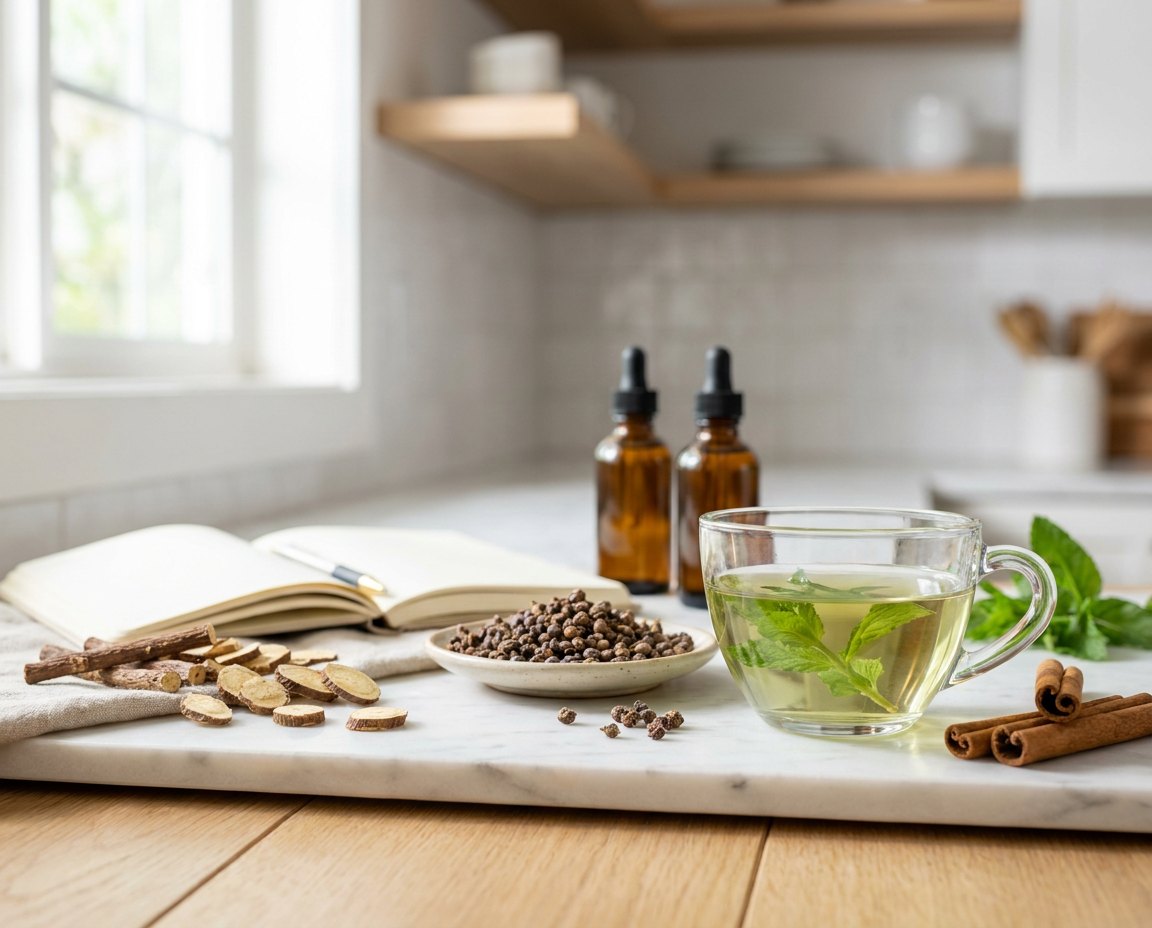
The herbs for PCOS that people ask us about most are spearmint, cinnamon, chasteberry (vitex), saw palmetto, and licorice, often alongside inositol, which is a supplement rather than an herb. Early research on several of them is encouraging, and they work best as complementary support next to the care you get from your doctor. PCOS is a real medical condition, and it deserves a real diagnosis and a real care plan.
We hear from a lot of women in Winston-Salem and around the Triad who are living with PCOS and feel like they have tried everything. We are glad to talk herbs with you. We also want to share how herbs can fit gently alongside the care you already have.
What Is PCOS, and Why Does It Need a Doctor’s Care?
Polycystic ovary syndrome is a hormonal condition that affects far more than the ovaries. According to MedlinePlus, it can show up as irregular or missed periods, excess hair on the face or body, acne, thinning hair, weight that is hard to lose, and insulin resistance. It is also linked with higher long-term risk of type 2 diabetes, heart disease, high blood pressure, and endometrial cancer. You may also hear a newer name for it, polyendocrine metabolic ovarian syndrome, or PMOS.
That is exactly why PCOS needs a doctor. Treatment often includes lifestyle changes plus medications such as birth control pills, metformin, or fertility medicines, and your provider can check blood sugar, cholesterol, and other markers that no herb can measure.
Is Spearmint Tea Good for PCOS?
Spearmint tea for PCOS is probably the most talked-about idea online, and there is a little research behind it. A small randomized trial presented in 2008 had women with PCOS and unwanted hair growth drink spearmint tea or a placebo tea for 30 days. The spearmint group had lower androgen (male hormone) levels than the placebo group and reported better quality of life. That is an encouraging early result, and spearmint is also a refreshing, pleasant tea to enjoy every day.
Cinnamon and PCOS: What Does the Research Show?
Cinnamon and PCOS have been studied together because cinnamon has long been explored for blood sugar support. In a small Columbia University study, women with PCOS took 1.5 grams of cinnamon a day or a placebo, and the cinnamon group had more regular menstrual cycles. The researchers described these as preliminary findings, and cinnamon is an easy, warming spice to add to tea, oatmeal, or a morning smoothie.
Does Vitex (Chasteberry) Help With PCOS?
Vitex for PCOS comes up often because chasteberry has a long traditional history in women’s herbalism. According to the NIH’s National Center for Complementary and Integrative Health, several studies suggest chasteberry may ease PMS symptoms such as breast tenderness, and research specific to PCOS is still growing.
Because vitex works with the body’s hormones, it is best used with your doctor’s guidance if you use hormonal birth control, hormone therapy, or fertility treatment.
What About Saw Palmetto and Licorice Root?
Saw palmetto is best known as a men’s herb, and herbalists sometimes add it to women’s formulas because of interest in its possible effects on androgens. Research in women with PCOS is still early, and it often appears alongside other traditional herbs in women’s blends.
Licorice root is a traditional harmonizing herb in many blends, with a naturally sweet flavor. If you have high blood pressure or take blood pressure medication, read our guide to herbs to avoid with blood pressure medication and check with your doctor before using licorice.
Is Inositol an Herb?
Inositol is not an herb. It is a sugar-alcohol compound found in foods and sold as a supplement, usually as myo-inositol or D-chiro-inositol. A 2023 review prepared for the international PCOS guidelines looked at 30 trials with more than 2,200 participants and found that inositol may help some metabolic measures, and research continues. Your doctor can help you decide whether it fits, especially if you take metformin.
Natural Support for PCOS Beyond Herbs
When people ask us about natural support for PCOS, we always point to the basics first, because that is where the strongest evidence lives. MedlinePlus notes that healthy eating, regular exercise, and even a small amount of weight loss for those who need it can improve insulin response, help cycles become more regular, and reduce the effects of excess androgens. Sleep, stress care, and support for anxiety or depression matter too. Many women also notice painful periods along the way, and our post on what tea helps period cramps shares some gentle options.
At a Glance: Herbs and Supplements People Use for PCOS
| Herb | Traditional use | Common forms | Good to know |
|---|---|---|---|
| Spearmint | Studied for androgen support | Tea | Refreshing, minty cup; easy to enjoy daily |
| Cinnamon | Studied for cycle and blood sugar support | Spice, tea, tincture | Warming spice; lovely in tea or oatmeal |
| Chasteberry (vitex) | Women’s cycle support | Tincture, capsule | A staple of women’s herbalism; best with your doctor’s guidance |
| Saw palmetto | Androgen-related support | Tincture, capsule | Often blended with other women’s herbs |
| Licorice root | Harmonizing herb in blends | Tea, tincture | Naturally sweet; rounds out herbal blends |
| Inositol (not an herb) | Studied for metabolic support | Powder, capsule | Found in foods and supplements; your doctor can help you choose a form |
House of Serenity PCOS Tincture and Support Bundle
For women who want a traditional herbal blend to use alongside their doctor’s care, we carry the House of Serenity PCOS Tincture. It brings together saw palmetto, cinnamon, red clover, dandelion root, dandelion leaf, chasteberry (vitex), licorice root, and lemon balm in a base of gluten-free alcohol and coconut-derived glycerin. If you are pregnant, nursing, taking medications, or have any concerns, you can talk with your healthcare provider or with Kayla, the herbalist behind House of Serenity, who works one-on-one with clients.
The House of Serenity PCOS Support Bundle is another option, and our team can walk you through it. Neither product treats or cures PCOS. They are herbal support for use within your doctor’s plan.
Where to Find Herbs for PCOS in Winston-Salem
Stop by The Leafy Source at 4838 Country Club Rd, Winston-Salem, NC 27104. Our team is happy to answer questions and talk through ingredients. You can also shop the PCOS Tincture online.
Frequently Asked Questions About Herbs for PCOS
Can herbs cure PCOS?
No. PCOS is a lifelong medical condition, and no herb can cure it. Some herbs, like spearmint and cinnamon, have been studied in small trials with encouraging early results. Think of herbs as gentle, complementary support alongside your doctor’s care, healthy eating, movement, and regular checkups for blood sugar and heart health.
How much spearmint tea do people drink for PCOS?
The small study we mentioned had women drink spearmint tea for 30 days. Many people enjoy one to two cups a day as part of a calm routine, hot or iced, and spearmint blends nicely with a little honey or lemon. Choose a time of day that feels easy to stick with, like a mid-morning or after-dinner cup.
Can I blend herbs for PCOS into one tea?
Yes. Spearmint and cinnamon make a warm, naturally sweet pairing, and a little lemon balm adds a soft, citrusy note. Steep for five to ten minutes and sip slowly. If you would rather keep things simple, our House of Serenity PCOS Tincture brings several traditional herbs together in one bottle that is easy to add to water or tea.
How do I make spearmint tea?
Steep about a tablespoon of dried spearmint leaves in a cup of hot water for five to seven minutes, then strain. Spearmint is softer and sweeter than peppermint, so many people enjoy it plain. It also makes a lovely iced tea: brew a strong batch, let it cool, and pour it over ice for a refreshing afternoon drink.
Can I use herbs for PCOS while trying to get pregnant?
Please talk to your doctor first. If you are actively trying to conceive or working with a fertility specialist, let them guide which herbs and supplements belong in your routine, so everything works together with your care plan. Many women find it helpful to bring a list of the teas and tinctures they enjoy to that conversation.
Sources
- MedlinePlus: Polycystic ovary syndrome
- Endocrine Abstracts: Spearmint herbal tea in PCOS, randomised clinical trial (2008)
- NCCIH: Chasteberry
- NCCIH: Licorice Root
Before starting any new herbal product or wellness routine, consult with a qualified healthcare professional, especially if you are pregnant, nursing, taking medications, or managing a medical condition.