
If you are wondering how to get energy naturally without caffeine, start with the basics: steady sleep, enough water, regular movement, and meals built around protein and fiber. Once those are in place, some people add gentle herbal support such as eleuthero, ginseng, maca, or ashwagandha, along with uplifting aromas like rosemary and peppermint. Research on these herbs is still growing, and many people enjoy them as gentle helpers alongside good rest.
We hear this question at the counter all the time. Maybe coffee leaves you jittery, or maybe you are just tired of the afternoon caffeine roller coaster. Whatever brought you here, there are plenty of gentle ways to feel more like yourself, and we will walk through what the science says in plain words.
How to Get Energy Naturally Without Caffeine: Start With the Basics
Rest is the foundation of steady energy. A consistent bedtime and wake time often does more for daytime energy than anything in a bottle. If winding down is the hard part, our guide to natural sleep aids that work covers calming routines and herbs worth knowing.
Hydration comes next, since even mild dehydration can leave you feeling foggy and flat. Movement matters too. A brisk 10 minute walk can lift your energy more than sitting still. Finally, look at your plate. Meals heavy in sugar and refined carbs can lead to a quick rise and a hard crash, while pairing protein, fiber, and healthy fats helps keep energy steadier.
Why Do I Get an Afternoon Slump?
The afternoon slump usually has a few overlapping causes. Your body’s natural rhythm dips a bit in the early afternoon, and a heavy, carb-rich lunch can deepen that dip. A lighter lunch with protein, a short walk in daylight, a big glass of water, and a caffeine-free herbal tea can help many people push through.
What Are the Best Herbs for Fatigue and Low Energy?
Many herbs people use for energy are called adaptogens, a traditional term for plants believed to help the body handle stress. The science behind the idea is still developing.
Eleuthero (Siberian Ginseng)
Eleuthero has a long history of traditional use in Russia and East Asia for stamina. Research is still growing. In a randomized controlled trial published in Psychological Medicine that included 96 people with long-lasting fatigue, the researchers saw possible benefits in people with milder fatigue and described those early findings as worth exploring further.
Asian Ginseng
According to the National Center for Complementary and Integrative Health (NCCIH), a 2023 review of 19 studies found ginseng alone may have a small benefit for general fatigue, and research continues. Many people take it in the morning or early afternoon, since it can feel lively and some people find it keeps them up at night.
If you have high blood pressure or take medications, our guide to herbs to avoid with blood pressure medication is a helpful read, and a quick chat with your doctor can help you decide whether ginseng fits your routine.
Maca Root
Maca is a root vegetable from the Andes of Peru, traditionally eaten as food and used for stamina. Many people enjoy the powder in smoothies. Research on maca for energy and mood is still growing, and its nutty, malty flavor makes it a fun addition to oatmeal too.
Ashwagandha
The NIH Office of Dietary Supplements reports that several studies found people taking ashwagandha for 6 to 8 weeks reported less stress, anxiety, fatigue, and sleeplessness, and research continues. Because it is often linked with rest, some people prefer it in the evening, which we explore in does ashwagandha help you sleep.
Its earthy flavor works well stirred into warm milk or blended into a smoothie. Our Organic Ashwagandha Root is available in the shop.
Rosemary and Peppermint Aroma
Sometimes a scent is the easiest pick-me-up. A small 2012 study at Northumbria University had 20 healthy volunteers complete mental tasks in a room scented with rosemary, and higher blood levels of the rosemary compound 1,8-cineole lined up with better speed and accuracy. Peppermint has a similar bright reputation. Enjoy them as simple rituals: crush a fresh rosemary sprig or brew a cup of Organic Peppermint Leaf tea. If you like essential oils, a few drops in a diffuser fill the room with that same fresh scent.
Which Caffeine-Free Teas Help With Energy?
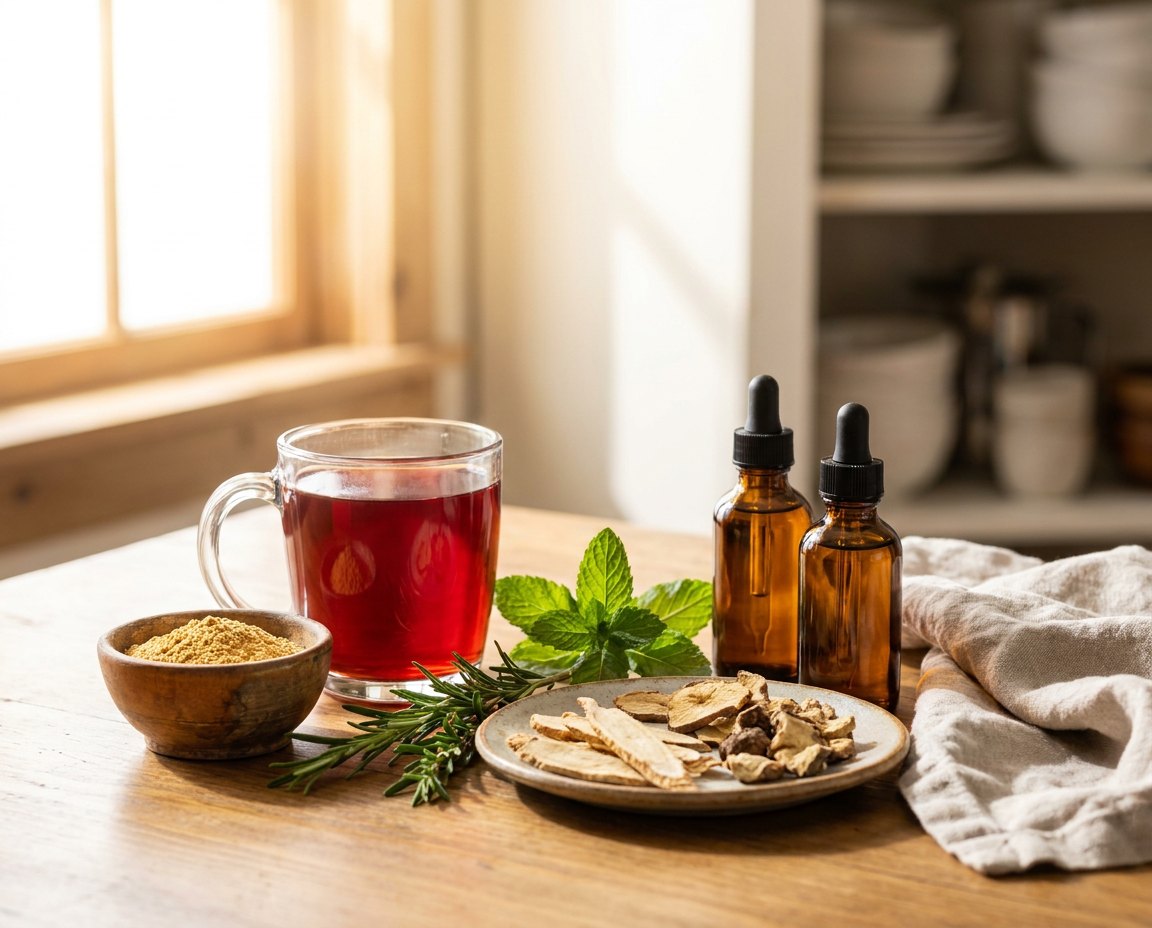
Rooibos, a red South African tea, is naturally caffeine-free with a smooth, slightly sweet flavor. Peppermint tea is crisp and refreshing, and ginger, lemon, and rosemary teas are easy options too. Swapping your afternoon coffee for one of these can also protect your sleep, which pays you back with better energy tomorrow.
At a Glance: Caffeine-Free Energy Herbs
| Herb | Traditional use | Common forms | Good to know |
|---|---|---|---|
| Eleuthero | Stamina and resilience | Tincture, capsule, tea | Earthy and mild, often taken in the morning |
| Asian ginseng | Vitality and fatigue | Tincture, capsule, tea | Best enjoyed earlier in the day |
| Maca root | Stamina, used as a food | Powder, capsule | Nutty and malty, great in smoothies |
| Ashwagandha | Stress and rest | Root, powder, tincture | Earthy; many prefer it in the evening |
| Rosemary and peppermint | Alertness, uplifting aroma | Tea, fresh herb, aroma | Bright and refreshing as tea or aroma |
| Rooibos | Caffeine-free daily tea | Loose tea | Smooth and slightly sweet, any time of day |
House of Serenity Tinctures for Everyday Energy
For people who like the convenience of a tincture, the House of Serenity Energy Tincture is built around adaptogenic herbs. Its featured herbs include eleuthero, ginseng, maca root, ashwagandha, peppermint, and rosemary, the same plants we covered above. It is a simple way to bring these traditional herbs into your morning routine.
Some folks pair it with the House of Serenity Green Mineral Tincture, made with nettle leaf, oat straw, alfalfa, and horsetail in gluten-free alcohol. Together with good sleep and nourishing meals, they can be part of a thoughtful daily routine.
Good to Know
Many people enjoy these herbs as part of an energizing daily routine. Mayo Clinic suggests checking in with your doctor if rest, healthy eating, and plenty of fluids have not helped after two weeks or more. If you are pregnant, nursing, taking medications, or have any questions about whether an herb is right for you, you can talk with your healthcare provider or with Kayla, the herbalist behind House of Serenity, who works one-on-one with clients.
Where to Find Energy Herbs in Winston-Salem
Stop by The Leafy Source at 4838 Country Club Rd, Winston-Salem, NC 27104. Our team is happy to talk through your routine and help you find a good fit. You can also browse the House of Serenity Energy Tincture online anytime, or find Ashwagandha Root Powder on the House of Serenity website.
Frequently Asked Questions About Natural Energy Without Caffeine
What is the fastest way to get energy without caffeine?
For a quick lift, many people find that a short, brisk walk outside, a big glass of cold water, and a few deep breaths work surprisingly well. A cup of peppermint tea or the scent of fresh rosemary can feel refreshing too. Over the long run, consistent sleep and balanced meals make the biggest difference.
Can I blend energy herbs into a smoothie?
Yes. Maca powder has a nutty, malty flavor that blends well with banana, cocoa, and nut butter, and many people add ashwagandha powder to smoothies too. Start with a small spoonful so the earthy flavors stay pleasant. Pair it with protein and fiber for the steadiest energy through your morning.
What time of day should I take ginseng?
Most people enjoy ginseng in the morning or early afternoon, when they want to feel their most alert. NCCIH notes it can make it harder for some people to fall asleep, so an earlier serving keeps your evenings restful. Good sleep is one of the best natural energy sources there is, so protect it.
Is rooibos tea caffeine-free?
Yes. Rooibos comes from a South African shrub, not the tea plant that gives us black and green tea, so it is naturally caffeine-free. That makes it a cozy swap for an afternoon cup of coffee. Its smooth, mild flavor pairs nicely with honey, milk, cinnamon, or a slice of orange.
Why am I always tired even when I sleep enough?
Ongoing tiredness can have many causes, from sleep quality to nutrition, stress, and some medications, and sleep apnea can leave you worn out even after a full night in bed. If fatigue lasts more than two weeks despite healthy habits, a visit with your doctor is a great next step, since they can help you find the cause.
Sources
- Mayo Clinic: Fatigue, when to see a doctor
- NCCIH: Asian Ginseng
- NIH Office of Dietary Supplements: Ashwagandha
- Psychological Medicine: Randomized controlled trial of Siberian ginseng for chronic fatigue
Before starting any new herbal product or wellness routine, consult with a qualified healthcare professional, especially if you are pregnant, nursing, taking medications, or managing a medical condition.