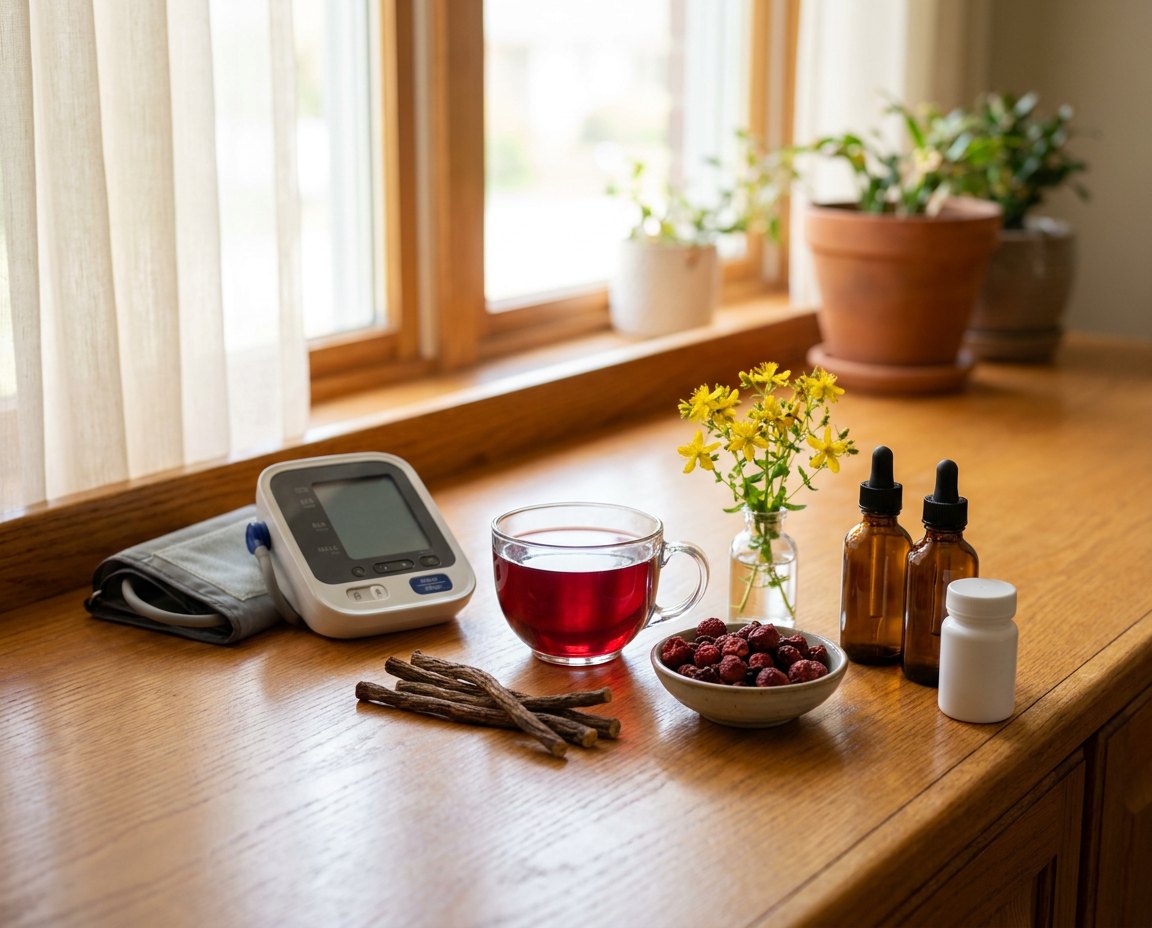
When people look up herbs to avoid with blood pressure medication, the good news is that herbs can still have a place in your routine with a little guidance. A short list is best checked with your doctor first: herbs that may nudge blood pressure up, such as licorice root, ephedra, yohimbe, bitter orange, and ginseng, and heart-focused herbs that may work alongside your medicine, such as St. John’s wort, hibiscus, hawthorn, and garlic supplements. A quick conversation with your pharmacist or doctor is the easiest way to enjoy herbs with confidence.
We love herbs. Our shelves on Country Club Road are full of them, and we spend most of our day talking with Winston-Salem neighbors about teas, tinctures, and loose botanicals. That is exactly why we wanted to write this post. Plants are active, which is part of what people love about them, and it also means they work best when they fit well with the medications you already take.
Think of this as a friendly guide from the team behind the counter. We are not your doctor, but we can share what trusted sources like the National Institutes of Health and Mayo Clinic say, and help you feel confident about the products we carry.
Herbs People Enjoy With Their Doctor’s Guidance
Plenty of our customers who take blood pressure medication still enjoy herbs every day. Hibiscus is one of the most popular herbal teas in the world and has been studied for blood pressure. Hawthorn is a classic heart herb in Western herbal tradition. Garlic is a kitchen staple people have cooked with for generations. Because these herbs are traditionally tied to heart support, they are the ones your doctor will want to hear about, so together you can fit them into your routine.
What Are the Herbs to Avoid With Blood Pressure Medication?
When people ask us about herbs to avoid with blood pressure medication, we sort the answer into two simple groups. The first is herbs that may nudge blood pressure up on their own. The second is herbs that may work alongside your medication in ways your doctor will want to know about. Mayo Clinic notes that many herbal supplements can affect how heart and blood pressure medicines work, which is why a quick check with your pharmacist goes a long way.
Which Herbs Raise Blood Pressure?
The National Center for Complementary and Integrative Health (NCCIH) lists bitter orange, ephedra, ginseng, and licorice root as herbs that may raise blood pressure. Yohimbe belongs on this list too.
Licorice Root and Blood Pressure
Licorice root has a long history in Egyptian, Greek, Chinese, and Indian traditions, mainly for coughs. It contains a compound called glycyrrhizin, and NCCIH notes that people with high blood pressure may be sensitive to it, especially with larger amounts or long-term use. Most licorice candy sold in the U.S. does not contain real licorice herb, but loose licorice root and many herbal blends do, so it is one to check with your doctor first.
Ephedra
Ephedra’s main active compound is ephedrine. The FDA banned ephedrine alkaloids in dietary supplements in 2004, so it should not appear in legal U.S. supplements today.
Yohimbe
Yohimbe is often sold for energy or sexual performance. NCCIH notes that yohimbine, its main active compound, has been linked to higher blood pressure and a faster heartbeat, so if you are on blood pressure medication, this is one to skip unless your doctor says otherwise.
Bitter Orange
Bitter orange became popular in weight loss and energy products after ephedra was banned. NCCIH notes that some studies suggest it may raise blood pressure and heart rate. Bitter orange in normal food amounts is generally fine, and concentrated supplements are worth a quick check with your doctor.
Ginseng
Ginseng is on the NCCIH list of herbs that may raise blood pressure, and Mayo Clinic notes it may affect how the blood thinner warfarin works. It shows up in many energy drinks and blends, so a quick label check helps.
Herbs to Check With Your Pharmacist First
Some herbs do not raise blood pressure on their own but may still work alongside your prescription, so they are worth a quick conversation.
St. John’s wort is a well-known mood herb, and Mayo Clinic notes it may affect how well calcium channel blockers, digoxin, statins, and warfarin work. If you take any of these, your pharmacist can help you decide whether it fits.
Hawthorn is a classic heart herb in Western herbal tradition. Mayo Clinic notes it may add to the effects of heart medicines like beta blockers, calcium channel blockers, nitrates, and digoxin, so it is best enjoyed with your doctor’s guidance.
Garlic is a kitchen favorite, and cooking with it is different from taking concentrated capsules. Mayo Clinic notes garlic supplements may add to the effects of blood thinners like aspirin, clopidogrel, or warfarin, so if you take one of those alongside a blood pressure pill, it is worth asking.
Hibiscus Tea and Blood Pressure Medicine
Hibiscus is one of the most popular herbal teas in the world, with a bright, tart, ruby red cup. NCCIH notes that roselle (Hibiscus sabdariffa) has been studied for blood pressure, which is part of why so many people are curious about it. If you already take blood pressure medicine, the herb and the medicine may nudge in the same direction, so your doctor or pharmacist can help you decide how hibiscus fits your routine. An early animal study also looked at hibiscus alongside hydrochlorothiazide, a common water pill, which is one more reason to mention it at your next visit.
Herbs to Avoid With Blood Pressure Medication: At a Glance
| Herb | Traditional use | Common forms | Good to know |
|---|---|---|---|
| Licorice root | Coughs, throat comfort | Loose root, tea, tincture | Naturally sweet; check with your doctor first if you have high blood pressure |
| Yohimbe | Energy, sexual performance | Capsules, extracts | Best skipped with blood pressure medicine unless your doctor says otherwise |
| Bitter orange | Energy, weight loss blends | Capsules, powders | Food amounts are generally fine; ask about supplements |
| Ginseng | Energy, stamina | Capsules, tea, energy drinks | Common in energy drinks; a quick label check helps |
| St. John’s wort | Mood | Tincture, capsules, tea | Mention it to your pharmacist with any prescription |
| Hibiscus | Heart and refreshing teas | Tea, tincture | Bright, tart tea; ask your doctor how it fits your routine |
| Hawthorn | Heart support | Tincture, tea, capsules | Classic heart herb; enjoy with your doctor’s guidance |
| Garlic | Heart and immune support | Food, capsules | A kitchen staple; ask about concentrated capsules |
A Note About Products We Sell
We would rather tell you this ourselves. We carry Organic Licorice Root, and we love it for teas and blends. If you have high blood pressure, check with your doctor before adding it. Licorice root is also an ingredient in our House of Serenity PCOS Tincture, so the same tip applies there.
We also make the House of Serenity Blood Pressure Tincture, which contains hawthorn berry, hibiscus, and rose petals in alcohol and coconut-derived vegetable glycerin. If you take blood pressure medication, check with your doctor or pharmacist before using it, since it is meant to complement your care rather than replace prescribed medicine. If you have questions about whether an herb is right for you, you can talk with your healthcare provider or with Kayla, the herbalist behind House of Serenity, who works one-on-one with clients.
Where to Find Herbs in Winston-Salem
Stop by The Leafy Source at 4838 Country Club Rd, Winston-Salem, NC 27104. Our team is happy to write down exactly what is in a product so you can show it to your pharmacist, who sees your full medication list and is one of the best people to ask. You can also find our loose herbs and tinctures online with full ingredient lists.
Frequently Asked Questions About Herbs and Blood Pressure Medication
Can I drink licorice tea if I have high blood pressure?
Check with your doctor first. NCCIH notes that people with high blood pressure may be sensitive to glycyrrhizin, the compound in licorice root. Deglycyrrhizinated licorice (DGL) has the glycyrrhizin removed, which is why some people prefer it, and your pharmacist can help you decide which form fits your routine.
Can I drink hibiscus tea if I take blood pressure medicine?
Many people love hibiscus tea, and it is worth a quick check with your doctor first. Hibiscus has been studied for blood pressure, so it may nudge in the same direction as your medicine. Your pharmacist can help you decide how often to enjoy it, especially if you also take a water pill like hydrochlorothiazide.
What should I bring when I ask my pharmacist about an herb?
Bring the product itself or a photo of its ingredient list, along with your current medication list. Our team at The Leafy Source is happy to write down exactly what is in any product we carry. Your pharmacist sees your full medication picture and can help you choose herbs that fit comfortably into your routine.
Which herbs raise blood pressure?
NCCIH lists bitter orange, ephedra, ginseng, and licorice root as herbs that may raise blood pressure. Yohimbe has also been linked to higher blood pressure. Ephedra supplements have been off U.S. shelves since 2004, and the others often appear in energy or weight loss blends, so a quick label check helps.
Can I still enjoy hawthorn?
Many people do. Hawthorn is a classic heart herb in Western herbal tradition, often enjoyed as a tincture or tea. Because it may add to the effects of heart medicines like beta blockers, calcium channel blockers, nitrates, and digoxin, the best approach is to enjoy it with your doctor’s guidance so it fits well with your care.
Sources
- Mayo Clinic: Herbal supplements and heart medicines may not mix
- NCCIH: Hypertension (High Blood Pressure)
- NCCIH: Licorice Root, Usefulness and Safety
- PubMed: Hibiscus sabdariffa extract and hydrochlorothiazide in experimental animals
Before starting any new herbal product or wellness routine, consult with a qualified healthcare professional, especially if you are pregnant, nursing, taking medications, or managing a medical condition.