
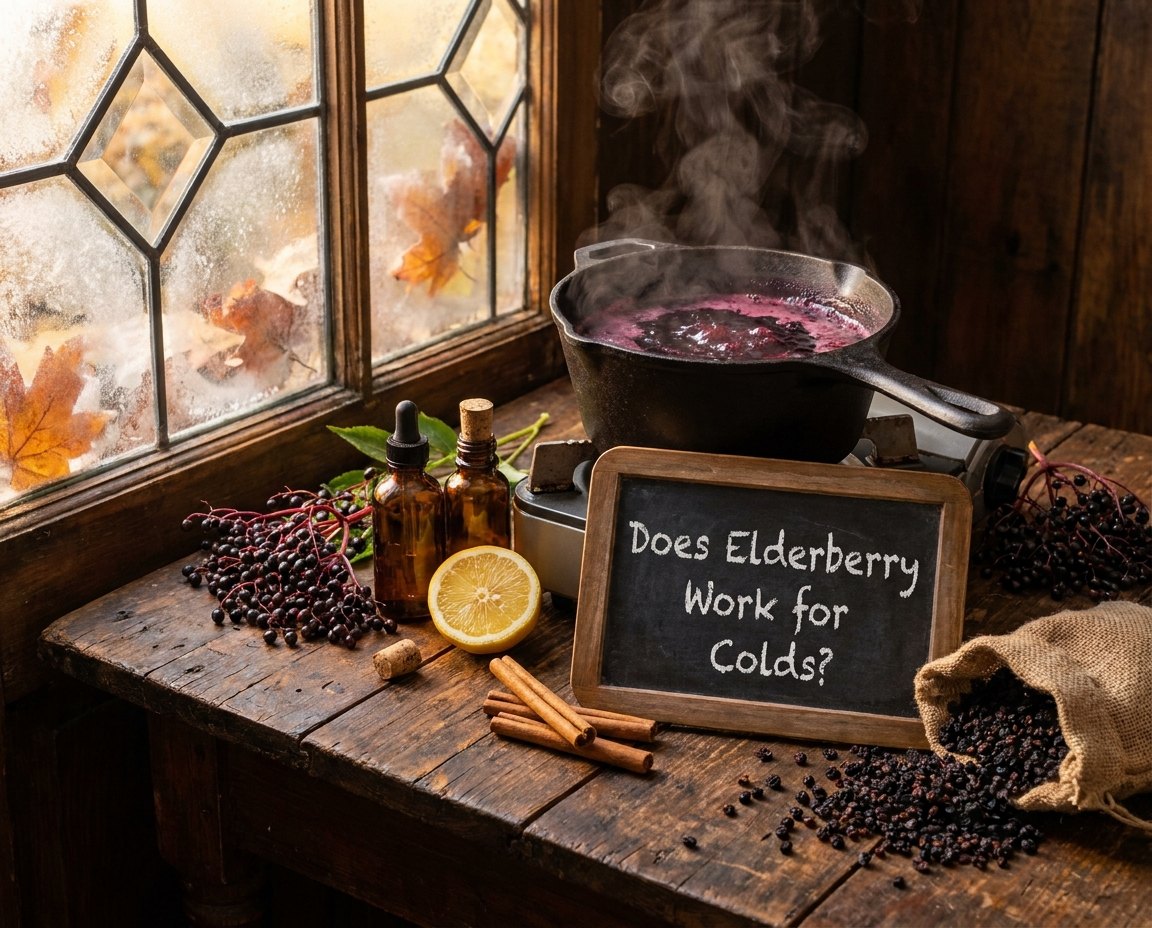
Does elderberry work for colds? The short answer is that studies suggest elderberry may help ease cold and flu symptoms and possibly shorten how long they last, and early research is encouraging. It is a time-honored herb that people have reached for during cold season for generations, and it works best as one part of a cozy, sensible cold season routine.
Cold and flu season is starting to roll through the Triad, and we are already hearing from customers who want something on the shelf before the first sniffle. Elderberry is one of the herbs people ask us about most this time of year, so we wanted to lay out what the research says and how to use it thoughtfully.
Does Elderberry Work for Colds? What the Research Says
The National Center for Complementary and Integrative Health (NCCIH) notes that a number of studies have looked at elderberry for colds, flu, and other upper respiratory concerns. Some of that preliminary research suggests elderberry may relieve symptoms, and research on this well-loved berry is still growing.
One of the more cited pieces of research is a 2019 meta-analysis indexed on PubMed. It pooled randomized controlled trials covering a total of 180 participants and found that elderberry supplementation was associated with a substantial reduction in upper respiratory symptoms. That is an encouraging early result.
The RxList natural medicines summary adds helpful nuance. It rates elderberry as “possibly effective” for flu symptoms, based mainly on research using one specific elderberry syrup. Early research in air travelers also found that an elderberry extract may have shortened colds and eased symptoms.
Our take: elderberry has encouraging early research behind it for easing symptoms, and it works best alongside rest, fluids, handwashing, and a doctor visit when symptoms are severe or linger.
When to Take Elderberry for the Best Results
Most of the research on elderberry and symptom relief looked at people who started taking it soon after symptoms began. That lines up with how people have traditionally used it: at the first scratchy throat or that heavy, run-down feeling, not a week into a cold.
Many people take a seasonal approach, keeping elderberry on hand through the colder months and reaching for it when they start to feel run down. Always follow the directions on the label of the product you choose.
Elderberry Syrup vs. Tincture: Which Should You Choose?
Elderberry syrup is usually made by simmering the berries and sweetening the liquid with honey or sugar. It tastes like a rich berry jam, which makes it popular with picky eaters. The trade-off is the sugar, and remember that honey should never be given to babies under one year old.
An elderberry tincture is a concentrated liquid extract taken by the dropper. Tinctures are compact, travel well, keep for a long time, and are easy to add to water, tea, or juice. Because the serving is small, there is less sugar to think about. Some tinctures are made with alcohol, so read the label and decide what fits your family.
Neither form is automatically better. Choose based on taste, convenience, and who will be taking it.
Elderberry for Kids
This is one of the questions we hear most. Many families keep elderberry on hand for the whole household, and we always suggest checking with your pediatrician first so they can help you find the right amount for your child’s age and weight.
Once you have the okay, follow the label and store it out of reach.
Good to Know
Elderberry is enjoyed by many families each cold season, and properly prepared products like syrups, tinctures, and teas are the way to go, since the berries are traditionally cooked before use. If you are pregnant, nursing, taking medications, or have any questions about whether an herb is right for you, you can talk with your healthcare provider or with Kayla, the herbalist behind House of Serenity, who works one-on-one with clients.
At a Glance: Elderberry for Cold Season
| Herb | Traditional use | Common forms | Good to know |
|---|---|---|---|
| Elderberry (Sambucus nigra) | Seasonal immune support, easing cold and flu symptoms | Syrup, tincture, gummies, tea, lozenges | Rich, tart berry flavor; best started at the first sign of feeling run down; pairs well with warm tea |
Our House of Serenity Elderberry Tincture
If you want to keep elderberry on hand this season, our House of Serenity Elderberry Tincture is a family favorite at the shop. It is made by House of Serenity, our in-house herbal tincture brand, and it is designed for the whole family. A dropper slips easily into water or tea.
No herbal product can promise to keep you from getting sick. We see elderberry as one helpful part of a cozy cold season routine alongside sleep, hydration, good food, and handwashing. Speaking of sleep, rest matters a lot when you are run down. If you have trouble winding down at night, our House of Serenity Sleep Tincture blends lemon balm, valerian root, chamomile, oatstraw, and peppermint, and it is non-habit-forming. A warm cup of Organic Chamomile tea is another comforting way to end the day, and you can find more calming ideas in our post on the top 5 herbs for relaxing.
Where to Find Elderberry in Winston-Salem
You can find our elderberry tincture at The Leafy Source, 4838 Country Club Rd, Winston-Salem, NC 27104. Our team is always happy to answer questions and help you find what fits your family. Prefer to shop from home? You can order the House of Serenity Elderberry Tincture online.
Frequently Asked Questions About Elderberry for Colds
Does elderberry work for colds?
Research suggests elderberry may help ease cold and flu symptoms and possibly shorten them, and early studies are encouraging. The NCCIH describes the research as preliminary and still growing, and RxList rates elderberry as possibly effective for flu symptoms. Many families keep it on hand as one part of their cold season routine.
When should I start taking elderberry?
Most studies looked at people who started elderberry soon after symptoms appeared, which matches how it has traditionally been used. Many families keep it on hand through cold season so it is ready at the first sign of feeling run down. Follow the label directions on your product, and check with your doctor if you take medications.
Is elderberry syrup or tincture better?
Neither is clearly better. Syrup is sweet and kid friendly but contains added sugar, and honey-based syrups should never be given to babies under one. Tinctures are concentrated, portable, and lower in sugar, though some contain alcohol. Choose the form that fits your taste, routine, and household, and always read the label first.
Can kids take elderberry?
Talk with your pediatrician before giving elderberry to a child. The right amount depends on age, weight, and health history. Once your pediatrician approves, choose a product intended for family use, follow the label carefully, and store it out of reach like any other supplement in your home.
What does elderberry taste like?
Elderberry has a deep, tart berry flavor that many people compare to a rich jam, especially in syrups sweetened with honey. Tinctures taste more concentrated and earthy, so many people add a dropper to water, tea, or juice. A warm mug of tea with a little elderberry is a cozy way to enjoy it on a chilly evening.
Can I blend elderberry with other herbs?
Yes. Elderberry is often paired with warming herbs like ginger and cinnamon in homemade syrups, and it sits nicely alongside a cup of chamomile tea in the evening. Many families enjoy it together with rest, fluids, and other cold season comforts. Follow the label on your product for serving directions.
Sources
- Elderberry, National Center for Complementary and Integrative Health (NIH)
- Black elderberry supplementation and upper respiratory symptoms: a meta-analysis of randomized controlled trials (PubMed)
- Elderberry: Uses, Side Effects, and Interactions (RxList)
Before starting any new herbal product or wellness routine, consult with a qualified healthcare professional, especially if you are pregnant, nursing, taking medications, or managing a medical condition.