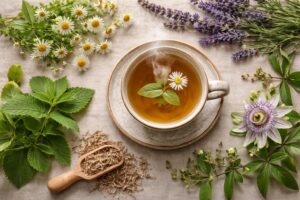


If you are wondering what tea helps you sleep, the herbal teas people reach for most are chamomile, lemon balm, valerian, passionflower, lavender, and caffeine-free peppermint. Each one has a long history as an evening herb, and a warm, caffeine-free cup can be a calming signal to your body that the day is done. Just skip caffeinated teas in the afternoon and evening.
Here at The Leafy Source, “what should I drink before bed?” is one of the questions we hear most often at the counter. Plenty of our Winston-Salem neighbors are tired of lying awake, and many would rather start with a gentle, old-fashioned ritual before reaching for anything stronger.
What Tea Helps You Sleep? The Bedtime Teas Worth Knowing
Good bedtime teas share two things: they are caffeine-free, and they come from herbs used for rest for generations.
Chamomile
Chamomile is the classic answer to “what is the best tea for sleep,” and for good reason. The small, daisy-like flowers make a soft, apple-scented cup that people have sipped at bedtime for centuries. Research on chamomile and sleep is still growing, and we think of it as one of the most comforting parts of a nighttime ritual.
Lemon Balm
Lemon balm is a member of the mint family with a bright, lemony flavor that makes it one of the most pleasant evening teas. Some small studies using a specific lemon balm extract have looked at sleep and restlessness with encouraging early results, and it often shows up in blends alongside chamomile and valerian.
Valerian Root
Valerian has a long history as a nighttime herb, and it has an earthy, frankly pungent smell that many people soften with honey or by blending it with mint. Research on valerian for sleep is still growing, and it remains one of the most popular nighttime herbs in teas and tinctures.
Passionflower
Passionflower is a beautiful climbing vine with striking purple blooms, and its leaves and stems make a mild, grassy tea. Early research suggests passionflower might improve total sleep time in adults with insomnia, and it is a lovely addition to evening blends.
Lavender
Lavender is better known for its scent than its taste, but a little culinary lavender adds a floral note to a chamomile or lemon balm cup. Most of the research on lavender and sleep looks at aromatherapy rather than tea, and research on lavender continues to grow. Use a light hand, since too much can taste soapy.
Peppermint
Peppermint is naturally caffeine-free, which makes it a refreshing choice when you want something warm after dinner without a jolt. Many people find a cup of mint relaxing as part of a wind-down routine, and if you would like something even softer in the evening, chamomile is a lovely swap.
Which Teas to Save for Earlier in the Day
Black tea, green tea, white tea, oolong, matcha, and yerba mate all contain caffeine, and many chai blends are built on black tea. A Mayo Clinic expert suggests a good rule of thumb is to avoid caffeinated drinks after 3 p.m. If you love an afternoon cup, switch to an herbal option once lunch is over. Always check the label on blends, since “relaxing” names do not guarantee a tea is caffeine-free.
How Long Before Bed Should You Drink Tea?
There is no official rule, but many people like to have their bedtime tea about 30 to 60 minutes before lights out. That gives you time to sip slowly and settle in, and it also leaves time for a bathroom trip so a full bladder does not wake you at 2 a.m.
The tea itself is only part of the picture. Pair it with dim lights, put the phone away, and keep a steady bedtime. Mayo Clinic suggests turning off electronics about 30 to 60 minutes before bed, which fits perfectly with a tea ritual. For more on calming herbs you can bring into your evenings, see our post on the top 5 herbs for relaxing.
Bedtime Tea Herbs at a Glance
| Herb | Traditional use | Common forms | Good to know |
|---|---|---|---|
| Chamomile | Calming evening ritual, rest | Tea, tincture | Soft, apple-like flavor; blends well with mint or lemon balm |
| Lemon balm | Restlessness, relaxation | Tea, tincture, extract | Bright, lemony taste; pairs well with chamomile |
| Valerian root | Nighttime rest | Tea, capsule, tincture | Earthy aroma; softened with honey or mint |
| Passionflower | Rest, nervous tension | Tea, extract | Mild, grassy cup; nice in evening blends |
| Lavender | Relaxation, aromatherapy | Tea blends, essential oil | Floral note; a little goes a long way |
| Peppermint | After-dinner comfort | Tea | Refreshing after dinner; naturally caffeine-free |
Bedtime Tea Favorites From The Leafy Source
If you want to start with the classic, our Organic Chamomile is loose organic chamomile you can steep on its own or blend with a pinch of mint or lemon balm. Use about a tablespoon of flowers per cup of hot water, cover the mug so the aroma stays in, and let it steep for five minutes or so.
Some people love the idea of bedtime herbs but do not want a full mug of liquid right before sleep. For those nights, the House of Serenity Sleep Tincture brings together several of the herbs in this guide in a few drops. It is made with lemon balm, valerian root, chamomile, oatstraw, and peppermint in a base of gluten-free alcohol and coconut-derived vegetable glycerin, and it is non-habit-forming. You can take it in a little water or add it to a smaller cup of tea. As with any herbal product, results vary from person to person.
Where to Find Bedtime Tea Herbs in Winston-Salem
You can find loose organic chamomile, House of Serenity tinctures, and more at The Leafy Source, 4838 Country Club Rd, Winston-Salem, NC 27104. Our team is always happy to talk through options, help you smell and compare herbs, and point you toward something that fits your evening routine. Prefer to shop from home? Pick up our Organic Chamomile online.
Frequently Asked Questions About Tea for Sleep
What is the best tea for sleep?
Chamomile is the most popular choice, with lemon balm, valerian, and passionflower close behind. The “best” tea is often the caffeine-free one you enjoy enough to drink every night, and a calm routine matters as much as the herb. If you have questions about which herb is right for you, you can talk with your healthcare provider or with Kayla, the herbalist behind House of Serenity, who works one-on-one with clients.
Does chamomile tea help you sleep?
Chamomile has a long tradition as a bedtime tea, and many people find the ritual soothing. Its soft, apple-like flavor and caffeine-free nature make it an easy way to tell your body the day is done. Research is still growing, and many people simply enjoy it as a gentle, steady part of winding down each night.
How long before bed should I drink tea?
Many people find 30 to 60 minutes before bed works well. That gives you time to relax with your cup and still use the bathroom before lights out, so you are less likely to wake up during the night. If you are sensitive to waking at night, try a smaller cup or move your tea earlier in the evening.
Is peppermint tea good before bed?
Peppermint tea is naturally caffeine-free, so it will not keep you up the way black or green tea can. Many people enjoy it as part of a relaxing evening, especially after a big dinner. If you would like a softer, more floral cup, chamomile or lemon balm are lovely choices too.
Are there teas I should avoid in the evening?
Yes. Black, green, white, and oolong teas, matcha, yerba mate, and most chai blends contain caffeine. Many experts suggest stopping caffeine by mid-afternoon. Check the ingredients on any blend, since some “evening” or flavored teas include a caffeinated base. When in doubt, choose a blend labeled caffeine-free or stick with single herbs.
Sources
- NCCIH: Sleep Disorders and Complementary Health Approaches
- NCCIH: Passionflower
- RxList: Lemon Balm
- Mayo Clinic News Network: Insomnia, What to Do When You Can’t Sleep
Before starting any new herbal product or wellness routine, consult with a qualified healthcare professional, especially if you are pregnant, nursing, taking medications, or managing a medical condition.