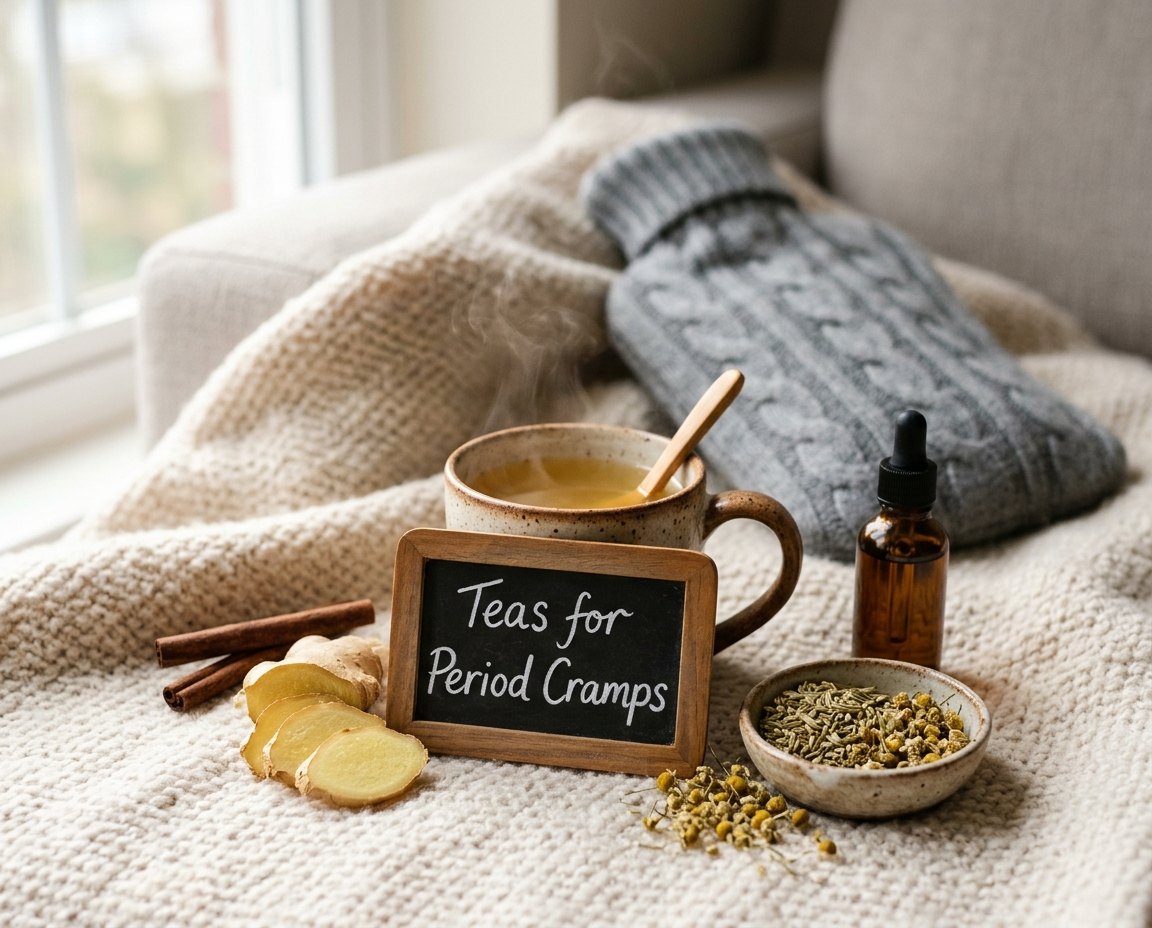
What tea helps period cramps? Ginger tea has the strongest research behind it, with small studies suggesting it may ease cramp pain, and chamomile, fennel, cinnamon, red raspberry leaf, and peppermint are other caffeine-free teas people traditionally reach for. Pair a warm cup with a heating pad and rest, and you have a comforting routine that many people find helpful during their period.
If you have ever curled up with a hot water bottle and a mug of something soothing, you know period comfort is part science and part ritual. At The Leafy Source, customers all over Winston-Salem ask us for gentle options for their monthly routine. Here are the herbs people use most, what research says, and how to brew them.
What Tea Helps Period Cramps the Most?
If we had to pick one, it would be ginger. Ginger is the herb with the most studies for menstrual cramps, and the National Center for Complementary and Integrative Health (NCCIH) says research suggests ginger supplements might help reduce the severity of menstrual cramps. Chamomile and fennel come next as traditional favorites, followed by cinnamon, red raspberry leaf, and peppermint. Each one brings its own flavor and comfort to a warm cup.
Ginger for Period Cramps: The Best-Studied Option
Ginger root has a long history in traditional medicine for warming the body and settling the stomach, which is handy when cramps bring nausea along with them. A systematic review that pooled several small trials found that oral ginger reduced pain scores more than placebo, and in two studies it performed about the same as mefenamic acid, a prescription pain reliever. Those are encouraging results, and research continues to grow.
To make ginger tea, slice about an inch of fresh ginger root thinly, simmer it in 2 cups of water for 10 to 15 minutes, then strain. A little honey and lemon make it easier to sip. Many people start drinking ginger tea a day or two before their period is expected. Its warm, spicy kick pairs beautifully with a cinnamon stick.
Chamomile for Cramps: Calming and Gentle
Chamomile is a beloved herbal tea that many people reach for when cramps and tension show up together, with a long traditional reputation for relaxation and digestion. Research on chamomile is still growing, and many people love it as a soothing, traditional comfort.
Chamomile has a soft, apple-like flavor and blends well with fennel or ginger. It is also a lovely evening tea, which is why it features in our guide to what tea helps you sleep.
Fennel, Cinnamon, and Peppermint
Fennel seed is a traditional digestive herb with a sweet, licorice-like flavor. The Mayo Clinic lists fennel among herbal products that may provide some relief for menstrual cramps, and research is still growing. Lightly crush 1 teaspoon of seeds and steep in hot water for 10 minutes.
Cinnamon adds natural sweetness and warmth to any cramp-season cup, and it has been studied in a few small trials for period discomfort. A cinnamon stick simmered with ginger makes a cozy blend. Peppermint is better known for digestion than for cramps, but its cooling flavor can be soothing when your stomach feels unsettled.
Red Raspberry Leaf Tea for Cramps
Red raspberry leaf has been a staple of women’s herbalism for generations, often described as a uterine tonic. Its reputation rests on generations of traditional use, and research on it is still growing.
Raspberry leaf is traditionally used in late pregnancy, so if you are pregnant or trying to conceive, check in with your doctor or midwife first. If you have questions about whether an herb is right for you, you can also talk with Kayla, the herbalist behind House of Serenity, who works one-on-one with clients.
Warmth and Comfort Habits That Help
Tea works best as part of a bigger self-care picture. The Mayo Clinic suggests a few simple habits for menstrual cramps: applying heat with a heating pad, hot water bottle, or warm bath; getting enough rest and sleep; staying physically active; and finding ways to manage stress, since stress may make cramps worse. A warm mug of herbal tea fits right into that routine.
Herbs for PMS and Cramps At a Glance
| Herb | Traditional use | Common forms | Good to know |
|---|---|---|---|
| Ginger | Warming, cramps, nausea | Fresh root tea, capsules, tincture | Warm, spicy flavor; many start a day or two before their period |
| Chamomile | Relaxation, digestion | Tea, tincture | Soft, apple-like flavor; lovely in the evening |
| Fennel seed | Digestion, bloating, cramps | Crushed seed tea | Sweet, licorice-like taste; lightly crush seeds before steeping |
| Cinnamon | Warming, comfort | Stick tea, spice | Natural sweetness; simmer a stick with ginger |
| Red raspberry leaf | Uterine tonic, cycle support | Leaf tea, tincture | Mild leaf tea; a staple of women’s herbalism |
| Peppermint | Digestion, cooling comfort | Leaf tea | Cooling and refreshing; pairs well with chamomile |
Our Favorite Herbs and Tinctures for Your Cycle
For a convenient option, our House of Serenity Menstrual Prep Tincture brings together red raspberry leaf, chamomile, lemon balm, rooibos, honeybush, ginger, cinnamon, orange peel, nettle leaf, chunmee green tea, and feverfew in a gluten-free alcohol base. It combines several of the traditional herbs in this guide in one bottle. Note that the chunmee green tea adds a small amount of caffeine.
If you love brewing your own cup, our Organic Fennel Seed and Organic Chamomile make a soft, slightly sweet blend. Steep a teaspoon of each together, add a few slices of fresh ginger, and you have a simple homemade period tea.
When to See a Doctor About Period Pain
Mild cramps are common, but severe pain is not something you have to push through. Please see your doctor or gynecologist if cramps keep you from work or school, get worse over time, or start later in life after years of easy periods. Pain during sex, pain between periods, very heavy bleeding that soaks through a pad or tampon every hour, or large clots are also worth checking. These can be signs of conditions like endometriosis or fibroids, which need medical care.
Where to Find Period Comfort Herbs in Winston-Salem
Visit The Leafy Source at 4838 Country Club Rd, Winston-Salem, NC 27104, to browse our loose organic herbs and House of Serenity tinctures in person. Our team is happy to help you find a blend that fits your routine. You can also order the Menstrual Prep Tincture online.
Frequently Asked Questions About Tea for Period Cramps
How fast does ginger tea work for cramps?
Responses vary from person to person, and the trials on ginger used different schedules. Many people like to begin sipping ginger tea a day before they expect their period and continue through the first days, pairing it with heat and rest for extra comfort.
Can I drink chamomile tea on my period?
Yes, chamomile tea is a gentle, caffeine-free choice many people enjoy during their period. Its soft, apple-like flavor pairs nicely with fennel or a few slices of fresh ginger, and a warm mug alongside a heating pad makes for a cozy evening.
How do I brew red raspberry leaf tea?
Steep about a teaspoon of dried red raspberry leaf in a cup of hot water for 5 to 10 minutes, then strain. The flavor is mild and leafy, a little like a gentle black tea without the caffeine, and it blends well with a slice of ginger or a cinnamon stick. Many people sip it regularly as part of their monthly routine.
What are the best herbs for PMS?
People often reach for chamomile and lemon balm for tension, ginger and fennel for cramps and bloating, and nettle leaf as a nourishing tea. Research on herbs for PMS is still growing, and many people enjoy building their own blend. If PMS strongly affects your mood or daily life, talk with your healthcare provider, since there are many effective options to explore together.
Can tea replace pain relievers for cramps?
Tea can be a comforting part of your routine, but it is not a replacement for medical care. Over-the-counter pain relievers are a common first step for cramps, and your doctor can help if pain is severe. Talk with your provider or pharmacist before combining herbs with any medication.
Sources
- NCCIH: Ginger
- Efficacy of Oral Ginger for Dysmenorrhea: A Systematic Review and Meta-Analysis
- NCCIH: Chamomile
- Mayo Clinic: Menstrual Cramps, Diagnosis and Treatment
Before starting any new herbal product or wellness routine, consult with a qualified healthcare professional, especially if you are pregnant, nursing, taking medications, or managing a medical condition.