The most reliable natural remedies for hot flashes are lifestyle changes: dressing in layers, keeping your room cool, sipping cold water, and avoiding common triggers like alcohol, caffeine, and spicy food. Herbs such as black cohosh, red clover, and sage are popular too, with traditional use and early research behind them. Your provider can help you put together the mix of options that fits you best.
If you are waking up drenched at 2 a.m., you know how disruptive hot flashes can be. Many women come into our shop looking for gentler ways to cope, so here is a clear look at cooling habits, the herbs for menopause people reach for most, and what the research says.
What Causes Hot Flashes?
Hot flashes are sudden feelings of warmth across the face, neck, and chest, sometimes with flushing, sweating, and a racing heart. They are linked to shifting hormone levels during perimenopause and menopause, which seem to affect how the body regulates temperature. At night they are often called night sweats. Your doctor can help you understand your own pattern.
What Are the Best Natural Remedies for Hot Flashes at Home?
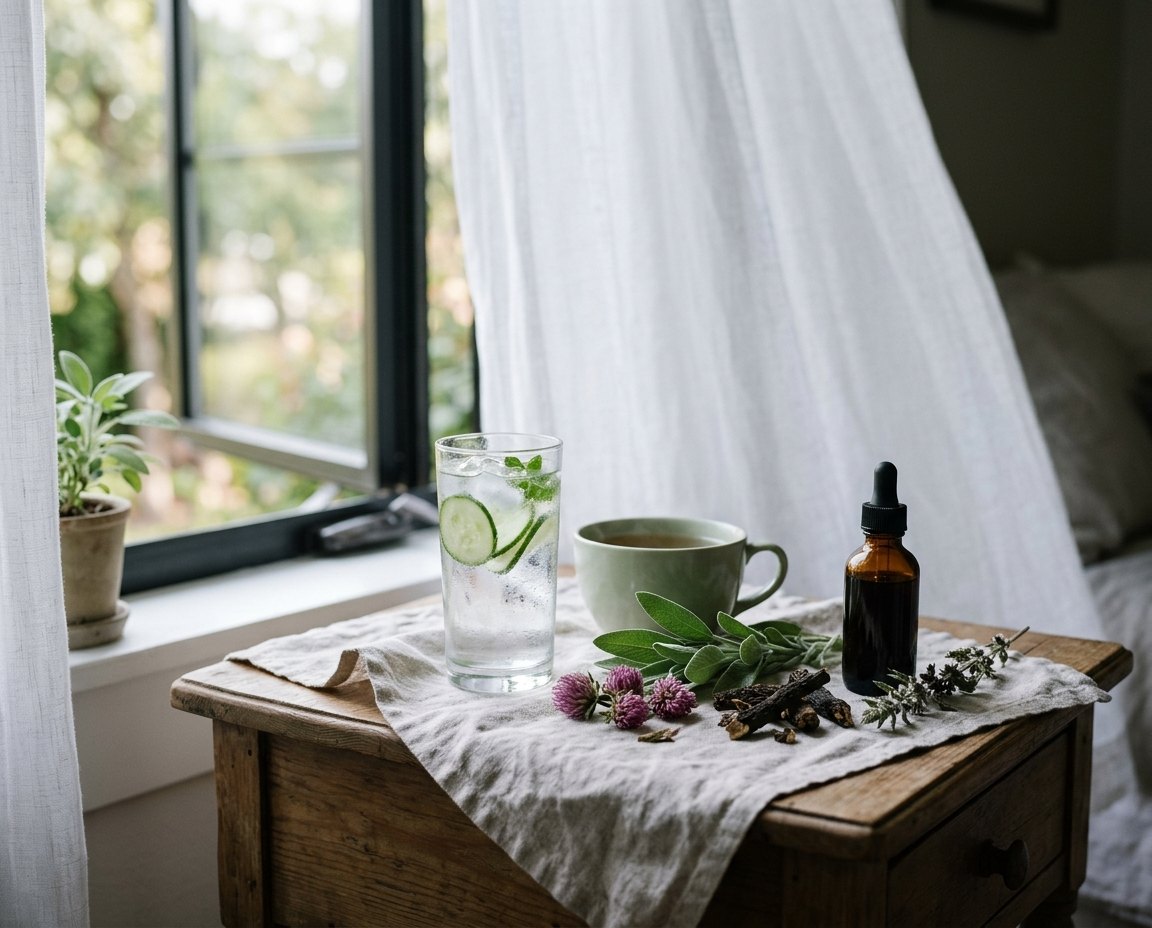
Mayo Clinic suggests a handful of simple cooling habits that may help with milder hot flashes. Dress in layers you can peel off quickly, keep a fan nearby, open a window or lower the thermostat, and sip a cold drink when you feel a flash starting.
Paying attention to triggers helps too. Hot and spicy foods, caffeine, and alcohol can set off hot flashes for some people. Quitting smoking and, for those carrying extra weight, gradual weight loss may also help. Slow, deep breathing when a flash begins may also offer some relief.
Mind-body approaches have some of the better evidence in this space. According to NCCIH, an NCCIH-funded study found that hypnotherapy reduced how often hot flashes happened in women who had them frequently, and Mayo Clinic notes cognitive behavioral therapy can reduce how much hot flashes bother you. If sleep is the main struggle, our guide to natural sleep aids that work has more ideas.
What Are the Benefits of Black Cohosh?
Black cohosh is a North American plant, and it is probably the most studied herb for menopause. Research is still growing. NCCIH reports that a 2023 review of 22 studies found black cohosh products were potentially beneficial for overall menopause symptoms, with improvements in hot flashes.
Women have reached for black cohosh for generations, and it is often taken as a tincture or capsule. If you are pregnant, nursing, taking medications, or have any concerns, you can talk with a professional before adding it to your routine.
Do Red Clover and Soy Help With Hot Flashes?
Red clover and soy contain isoflavones, plant compounds that are structurally similar to estrogen. Research on isoflavones from soy or red clover for hot flashes is still growing, and soy foods like tofu, edamame, and soy milk are an easy way to enjoy them at the table.
Red clover extracts appeared well tolerated in studies lasting up to 2 years. The pink blossoms make a mild, slightly sweet tea, and red clover also appears in our guide to herbs for PCOS.
Does Sage Help With Hot Flashes?
Garden sage has a long traditional reputation for easing sweating, and early research is encouraging. A 2011 study published in Advances in Therapy gave 71 postmenopausal women in Switzerland a once-daily fresh sage leaf tablet for 8 weeks and reported fewer and milder hot flashes. That is encouraging, and researchers are still learning more.
Sage as a cooking herb or an occasional cup of tea is a gentle way to try it. Its warm, savory flavor pairs nicely with lemon and a little honey, and a cooled cup of sage tea is refreshing on a warm evening.
What About Motherwort and Other Herbs for Menopause?
Motherwort is a member of the mint family that herbalists have traditionally used for women’s health and for feelings of tension and a fluttering heart. Modern research on it for hot flashes is still growing, so we see it as a traditional supporting herb that pairs well with others in a blend.
Other herbs sometimes suggested include dong quai and evening primrose oil, which have their own traditional followings while research continues.
At a Glance: Herbs for Hot Flashes
| Herb | Traditional use | Common forms | Good to know |
|---|---|---|---|
| Black cohosh | Menopause comfort | Tincture, capsule | Often taken as a tincture as part of a daily routine |
| Red clover | Women’s health, phytoestrogen | Tea, tincture, extract | Mild, slightly sweet blossom tea |
| Sage | Easing sweating | Tea, fresh herb, tablet | Savory tea, lovely with lemon |
| Motherwort | Tension, women’s health | Tincture, tea | Bitter on its own, nice in a blend or tincture |
| Soy | Phytoestrogen food | Food, supplement | Easy to enjoy as tofu, edamame, or soy milk |
House of Serenity Menopause Tincture
For these traditional herbs in one formula, the House of Serenity Menopause Tincture may be worth a look. Its featured herbs include black cohosh, red clover, sage, and motherwort, the same plants we discussed above, and you can read the full label in the shop or online.
Many women enjoy these herbs as part of their daily routine. If you are pregnant, nursing, taking medications, or have any concerns, you can talk with your healthcare provider or with Kayla, the herbalist behind House of Serenity, who works one-on-one with clients.
Why Talk to Your Provider About Hormone Therapy?
Both NCCIH and Mayo Clinic describe hormone therapy as the most effective medical option for menopausal hot flashes, and it is a helpful conversation to have with your doctor. Your provider can help you weigh every option, herbal and medical, and find the mix that fits your life.
Where to Find Herbs for Menopause in Winston-Salem
Visit The Leafy Source at 4838 Country Club Rd, Winston-Salem, NC 27104. Our team is happy to talk through herbs for menopause and help you find a good fit. You can also find the House of Serenity Menopause Tincture online, and explore the full House of Serenity shop.
Frequently Asked Questions About Natural Remedies for Hot Flashes
How long does it take for black cohosh to work?
There is no set timeline, and results vary from person to person. Black cohosh has been used safely in studies lasting up to a year, and many women find consistency matters, so they take it at the same time each day. Keeping a simple diary of how you feel can help you notice changes over several weeks.
Can I drink sage tea for hot flashes?
Many women enjoy a cup of sage tea, and garden sage has a long traditional history for easing sweating. Early research, such as a study of fresh sage tablets, is encouraging. To make a cup, steep about a teaspoon of dried sage in hot water for 5 to 10 minutes. Many people enjoy it cooled on warm nights, with a squeeze of lemon.
Are herbs for perimenopause different from herbs for menopause?
People reach for many of the same herbs in both stages, including black cohosh, red clover, and sage. Perimenopause can bring irregular cycles and changing symptoms, so many women adjust their routine as they go. A professional can help you choose herbs that fit each stage of the transition.
Can I combine cooling habits with herbs?
Yes, and many women find that pairing them works well. Dress in layers, keep a fan by the bed, and sip cold water, then add a cup of sage tea or a tincture as part of your daily routine. Slow, deep breathing when a flash begins is another easy habit that fits right alongside your herbs.
What foods and drinks can trigger hot flashes?
Common triggers include hot and spicy foods, caffeine, and alcohol, according to Mayo Clinic. Triggers differ from person to person, so a simple diary tracking what you ate, drank, and felt for a few weeks can help you spot your own patterns and make small swaps.
How do I take a menopause tincture?
Follow the directions on the label, which usually means adding drops to a little water or juice. Many women like taking it at the same time each day so it becomes part of their routine. If you have questions about how it fits with your medications or health history, bring the bottle to your healthcare provider so they can see every ingredient.
Sources
- NCCIH: Menopausal Symptoms and Complementary Health Approaches
- NCCIH: Black Cohosh
- NCCIH: Red Clover
- Mayo Clinic: Hot flashes, diagnosis and treatment
Before starting any new herbal product or wellness routine, consult with a qualified healthcare professional, especially if you are pregnant, nursing, taking medications, or managing a medical condition.