
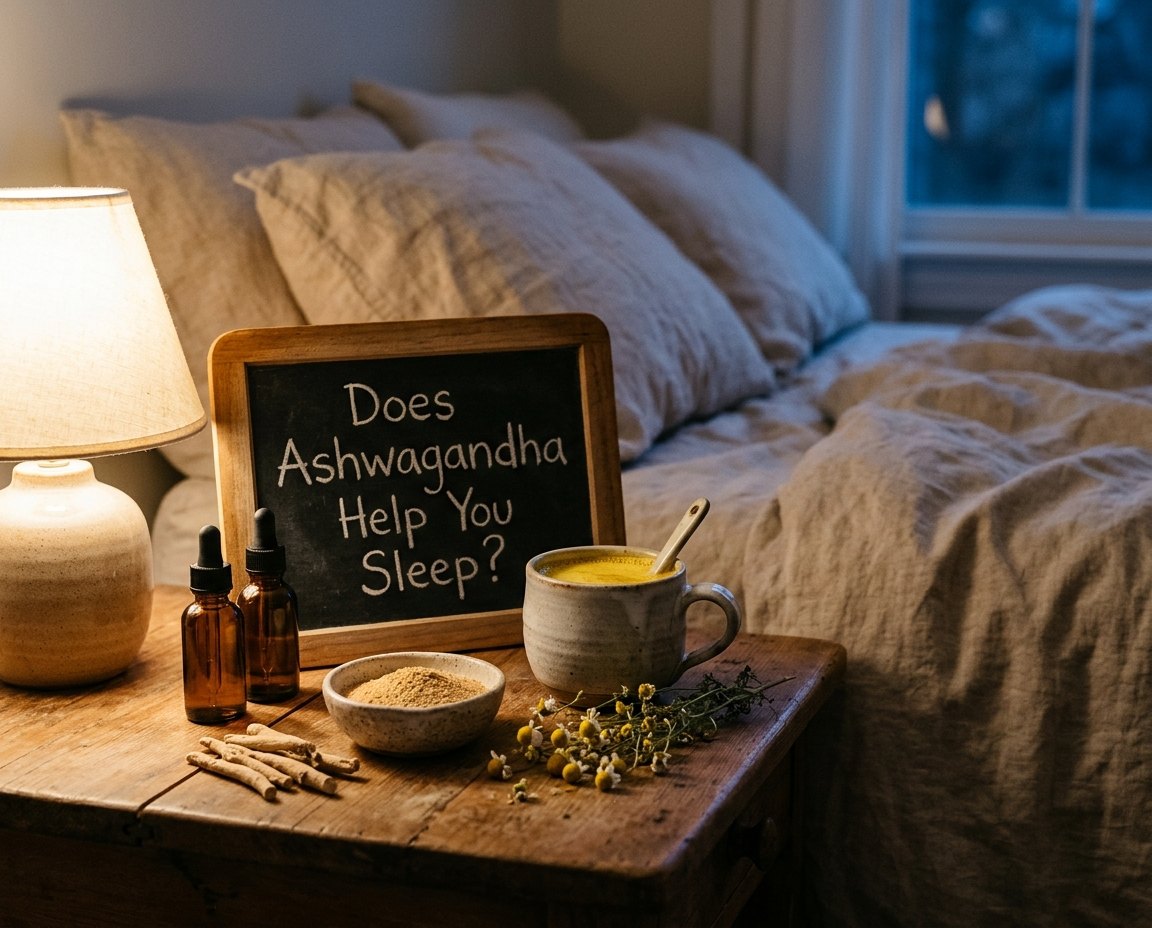
Does ashwagandha help you sleep? Research suggests it may. According to the NIH Office of Dietary Supplements, studies suggest ashwagandha extracts may help some people fall asleep faster, sleep longer, and wake less often, with benefits that seemed greatest at about 600 mg per day for at least eight weeks.
Ashwagandha is one of the herbs our Winston-Salem customers ask about most, usually after a few rough nights or a stressful season at work. It works gently and gradually rather than like a sleeping pill, which is exactly why so many people like making it part of a calm evening routine. Here is what the research says and how people enjoy it.
Does Ashwagandha Help You Sleep? What the Research Says
Ashwagandha (Withania somnifera) is a shrub whose root has a long history in India’s Ayurvedic tradition. Today it is mostly discussed as an adaptogen, an herb studied for how the body handles stress, and stress is one of the biggest reasons people lie awake.
The NIH Office of Dietary Supplements health professional fact sheet describes the sleep evidence as coming from a small number of studies. In one trial of 150 adults, a root and leaf extract taken for six weeks was linked to better sleep quality in 72 percent of the ashwagandha group compared with 29 percent of the placebo group. Another trial of 80 adults, half of whom had insomnia, used a root extract for eight weeks. A 2021 meta-analysis that pooled five studies with 372 adults found a small but significant effect compared with placebo, and the benefit looked larger in people with insomnia, at 600 mg per day, and with at least eight weeks of use.
Research is still growing. The trials so far used a range of extraction methods, plant parts, and doses, and scientists are still learning which form fits best. The MSD Manual, a reference for health professionals, describes the sleep data as suggesting a possible benefit. In short, early studies are encouraging that ashwagandha extracts may support sleep for some people, with results that build gradually.
When to Take Ashwagandha for Sleep
This is one of the most common questions we hear, and the surprising answer is that the sleep studies do not tell us. The NIH fact sheet notes that the trials reported how many capsules people took each day, but not what time of day they took them.
Because ashwagandha seems to work gradually rather than like a quick sedative, consistency matters more than the clock. Studies ran for six to twelve weeks, so a steady daily routine is the best way to see how it fits you.
Is It Better to Take Ashwagandha at Night?
Many people who use ashwagandha for sleep prefer to take it at night, often in the evening as part of a wind-down routine. One practical reason is that some people feel pleasantly drowsy after taking it, so an evening serving lets that relaxed feeling line up with bedtime. Others split it into a morning and evening serving, especially when they are using it more for daytime stress.
Pair it with the habits that matter most: a steady bedtime, a dark and cool room, and no late caffeine. Our guide to natural sleep aids that actually work goes deeper on those basics and on how ashwagandha compares with valerian, lemon balm, magnesium, CBD, and melatonin.
Good to Know Before You Try Ashwagandha
According to the NIH, ashwagandha was generally well tolerated in the studies, and many people enjoy it as part of a calm evening routine. If you are pregnant, nursing, taking medications, or have any questions about whether an herb is right for you, you can talk with your healthcare provider or with Kayla, the herbalist behind House of Serenity, who works one-on-one with clients.
At a Glance: Ashwagandha and Other Evening Herbs
| Herb | Traditional use | Common forms | Good to know |
|---|---|---|---|
| Ashwagandha | Stress and restful sleep in Ayurveda | Root, powder, capsules, tinctures | Earthy flavor, lovely stirred into warm milk in the evening |
| Valerian root | Nighttime calm | Tea, capsules, tinctures | Strong earthy aroma, often enjoyed in blends or tinctures |
| Lemon balm | Relaxation and restlessness | Tea, tinctures | Bright lemony flavor, pairs well with chamomile |
| Chamomile | Bedtime tea and calm | Tea, tinctures | Gentle floral cup, a classic bedtime tea |
Ashwagandha and Sleep Products at The Leafy Source
If you are ready to give ashwagandha a try, our Organic Ashwagandha Root is the cut, dried root, which some people simmer into a traditional earthy decoction. Our Organic Ashwagandha Root Powder is easy to stir into warm milk in the evening. Keep in mind that the studies above used concentrated extracts, so loose root and powder are not the same as the capsules researchers tested. If you prefer to shop online from our sister brand, you can also find Ashwagandha Root Powder on the House of Serenity website.
For a ready-made evening blend, the House of Serenity Sleep Tincture is made with lemon balm, valerian root, chamomile, oatstraw, and peppermint in a base of gluten-free alcohol and coconut-derived vegetable glycerin, and it is described as non-habit-forming. To be clear, it does not contain ashwagandha.
On the flip side, the House of Serenity Energy Tincture does include ashwagandha. Its featured herbs include eleuthero, ginseng, maca root, ashwagandha, peppermint, and rosemary, and it is built around adaptogenic herbs. That one is meant for daytime, not bedtime, so save it for your mornings and afternoons. If you enjoy more than one product, a quick look at the labels helps you keep track of how much ashwagandha you are taking.
If you would rather sip something, our post on what tea helps you sleep covers chamomile, lemon balm, and other gentle evening cups.
Where to Find Ashwagandha in Winston-Salem
You can find organic ashwagandha root, ashwagandha powder, and the full House of Serenity tincture line at The Leafy Source, 4838 Country Club Rd, Winston-Salem, NC 27104. Our team is happy to read labels with you and talk through the options. Prefer to shop from home? Order our Organic Ashwagandha Root Powder online.
Frequently Asked Questions About Ashwagandha and Sleep
How long does ashwagandha take to work for sleep?
In the studies reviewed by the NIH, people took ashwagandha extracts for six to twelve weeks, and the benefits looked greatest with at least eight weeks of use. That suggests it builds gradually rather than working on the first night, so a steady daily routine is the best way to see how it works for you.
How much ashwagandha did sleep studies use?
Doses varied widely. One study used 120 mg per day of a root and leaf extract, while others used 250 to 600 mg per day of a root extract. The NIH notes benefits seemed greatest around 600 mg per day. These were concentrated extracts, so the numbers do not translate directly to loose root or powder.
What does ashwagandha taste like?
Ashwagandha root has an earthy, slightly bitter flavor, which is why many people prefer the powder stirred into something warm and comforting. A cup of warm milk or plant-based milk with a pinch of cinnamon softens the taste nicely. Some people notice a relaxed, drowsy feeling after taking it, another reason the evening is a favorite time to enjoy it.
Can I blend ashwagandha with other evening herbs?
Many people enjoy ashwagandha as one part of a bigger wind-down routine, alongside a cup of chamomile or lemon balm tea. Its earthy flavor blends well with warm spices like cinnamon. If you are building a routine with several products or take medications, a quick chat with a professional can help you put together a plan that fits your day and your needs.
What is an easy way to use ashwagandha powder at night?
A simple option is to stir the powder into warm milk or a plant-based milk with a pinch of cinnamon, a cozy evening drink with roots in the Ayurvedic tradition. The cut root can also be simmered into an earthy decoction. The studies used concentrated extracts, so loose root and powder are a more traditional way to enjoy the herb as part of your routine.
Does the House of Serenity Sleep Tincture contain ashwagandha?
No. The House of Serenity Sleep Tincture is made with lemon balm, valerian root, chamomile, oatstraw, and peppermint. The House of Serenity Energy Tincture is the one that features ashwagandha among its herbs, and it is intended for daytime use rather than bedtime.
Sources
- NIH Office of Dietary Supplements: Ashwagandha, Fact Sheet for Health Professionals
- NIH Office of Dietary Supplements: Ashwagandha, Fact Sheet for Consumers
- MSD Manual Professional Version: Ashwagandha
Before starting any new herbal product or wellness routine, consult with a qualified healthcare professional, especially if you are pregnant, nursing, taking medications, or managing a medical condition.