

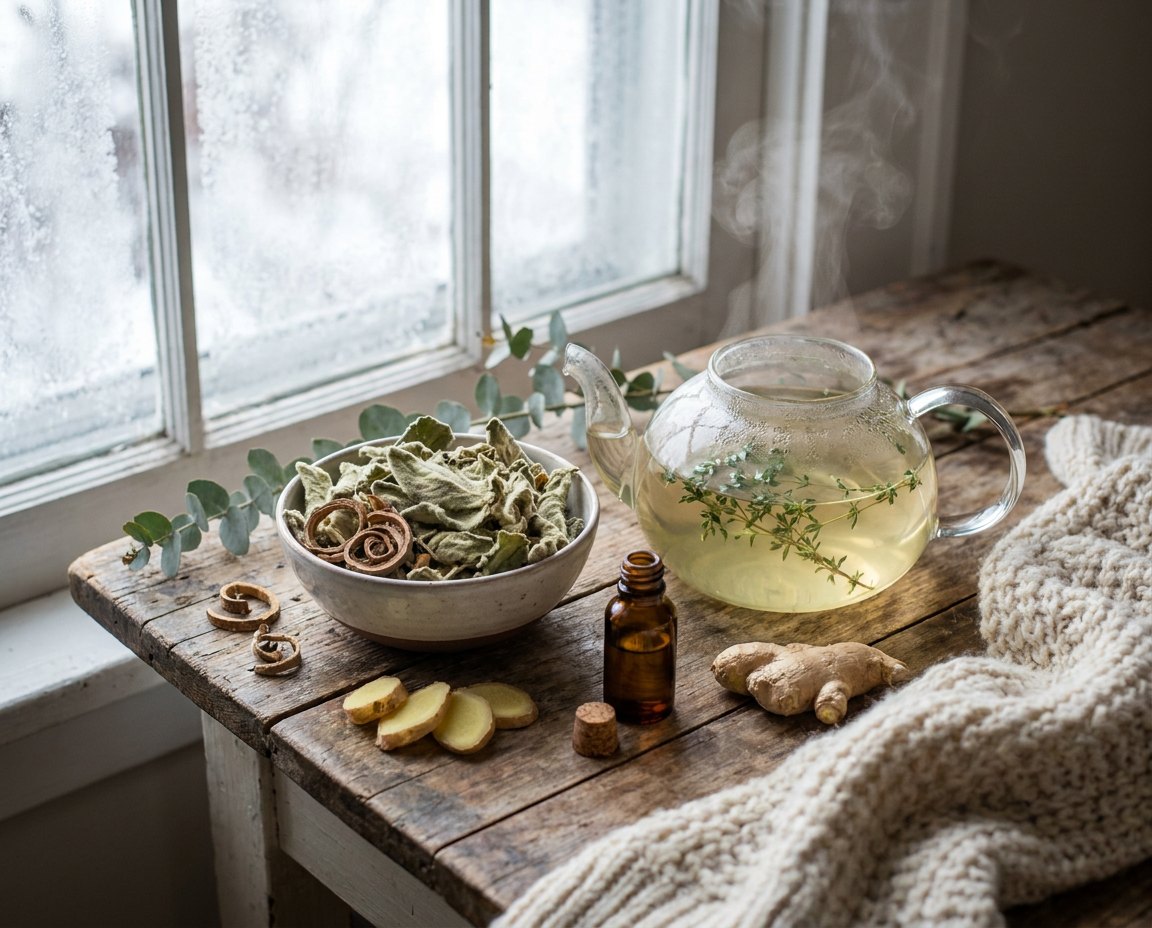
The herbs for lung health that people reach for most are mullein, thyme, licorice root, ginger, slippery elm, and eucalyptus steam. Several have long traditional use for soothing coughs and throats during colds, and European regulators recognize mullein and thyme on the basis of that tradition, and research on all of them is still growing. They can be a comforting part of a winter routine alongside the care you already get from your doctor.
Winter in the Triad has a way of reminding us how much we rely on easy breathing. The furnace kicks on and dries out the air at home, wood smoke drifts over the neighborhood on cold nights, and that first sharp breath of morning air on the walk to the car can set off a tickle in the throat. Every year, customers ask us what they can sip or steam to feel more comfortable.
What Are the Best Herbs for Lung Health?
What these plants share is a long history of use for comfort when a cold settles into the chest or throat. Think of them as soothing, traditional support for everyday seasonal discomfort, the kind of warm cup or steamy bowl that makes a chilly evening feel better.
Mullein
Mullein is the tall, fuzzy-leaved plant you may spot along North Carolina roadsides, used for generations in teas for coughs and scratchy throats. The European Medicines Agency’s herbal committee recognizes mullein flower preparations as a traditional herbal medicine for relief of sore throat associated with dry cough and cold, for adults and teens 12 and older. That recognition is based on long-standing traditional use, and research is still growing.
Thyme
The European Medicines Agency recognizes thyme preparations as traditional herbal medicines for productive, chesty coughs associated with colds. That recognition also rests on tradition, and early research is still growing. Thyme is a familiar kitchen herb with a warm, savory flavor that makes a cozy cup with a spoonful of honey.
Licorice Root
Sweet licorice root has a long history in traditional remedies for coughs and sore throats, and its natural sweetness makes it a favorite in winter tea blends. A little goes a long way, so it is usually enjoyed in small amounts as one part of a blend. If you take blood pressure medication, our guide to herbs to avoid with blood pressure medication has more, and a professional can help you decide whether licorice fits your routine.
Ginger
Hot ginger tea with honey and lemon is a winter tradition in many Southern kitchens. Research on ginger for coughs and breathing is still growing, but its warming, spicy flavor makes it one of the most comforting cups of the season.
Slippery Elm
Slippery elm bark turns slick in water, which is why it has long been used in teas and lozenges to coat a scratchy throat. It has generations of tradition behind it and a mild, slightly sweet flavor. Because it coats the throat and stomach, many herbalists suggest enjoying it a little apart from medications.
Eucalyptus Steam
Many people find warm steam with a few drops of eucalyptus oil refreshing when congested. Eucalyptus oil is meant for steam and external use, so keep the bottle on a high shelf and take your time with the hot water.
Herbs for Cough: What Does the Evidence Say?
Most of what we know about herbs for cough comes from traditional use, and research is still growing. Mayo Clinic notes that simple steps like a spoonful of honey, plenty of fluids, warm drinks such as tea or broth, and moist air from a cool mist humidifier or a steamy shower may help ease a cough. Honey is best saved for little ones over 1 year old.
How to Make Mullein Tea
Mullein tea is simple to make. Steep about 1 to 2 teaspoons of dried mullein leaf in a cup of hot water, covered, for 10 to 15 minutes. Then strain it well through a fine cloth or coffee filter, to catch mullein’s tiny leaf hairs for a smooth, gentle cup.
Herbs for Winter Breathing in the Triad
Dry indoor heat, cold air, and wood smoke are part of winter around Winston-Salem. Alongside your teas, run a clean humidifier, drink warm fluids, wrap a scarf loosely over your nose and mouth on cold mornings, and make sure your fireplace or wood stove vents well. Mayo Clinic also notes that tobacco smoke, including secondhand smoke, can make a cough worse.
At a Glance: Herbs for Lung Health
| Herb | Traditional use | Common forms | Good to know |
|---|---|---|---|
| Mullein | Dry cough and sore throat with colds | Leaf or flower tea, tinctures | Mild and earthy; strain through a fine cloth |
| Thyme | Chesty cough with colds | Tea, syrups, tinctures | Savory and warming, lovely with honey |
| Licorice root | Cough and sore throat | Tea, lozenges, tinctures | Naturally sweet; a little goes a long way in blends |
| Ginger | Warming cold season tea | Fresh root, tea, tinctures | Spicy and warming, pairs well with lemon |
| Slippery elm | Coating a scratchy throat | Tea, lozenges, powder | Mild and slightly sweet; enjoy apart from medications |
| Eucalyptus | Steam for congestion | Essential oil for inhalation | Fresh, cooling aroma; for steam only |
Our Breathe Easy Tincture and Respiratory Herbs
For customers who want a simple, ready-made option, we carry the House of Serenity Breathe Easy Tincture. Its featured herbs include mullein, slippery elm, and ginger, three of the classic respiratory herbs we covered above. It is a convenient way to add these traditional herbs to your winter routine.
If you prefer loose herbs, our Organic Slippery Elm Bark and Organic Licorice Root are on our shelves for home teas. You can also find Mullein Leaf on the House of Serenity website for your own mullein tea.
Since winter breathing complaints often start with a cold, you might also like our look at whether elderberry works for colds.
Good to Know
These herbs are a comforting part of a cozy winter routine for many people. If a cough lingers, breathing feels hard, or you have asthma or another lung condition, keep up the plan from your doctor and check in with them before adding something new. If you have questions about whether an herb is right for you, you can talk with your healthcare provider or with Kayla, the herbalist behind House of Serenity, who works one-on-one with clients.
Where to Find Herbs for Lung Health in Winston-Salem
Stop by The Leafy Source at 4838 Country Club Rd, Winston-Salem, NC 27104 to see our respiratory herbs and the full House of Serenity tincture line. Our team is happy to help you compare options. You can also order the House of Serenity Breathe Easy Tincture online.
Frequently Asked Questions About Herbs for Lung Health
What are the main mullein benefits?
Mullein is traditionally used to soothe a sore throat and dry cough during colds. The European Medicines Agency recognizes mullein flower preparations for that traditional use in adults and teens 12 and older, based on long-standing tradition. Many people enjoy it as a mild, earthy tea during the colder months, strained well through a fine cloth.
Can I blend mullein with other herbs?
Yes. Mullein has a mild, earthy flavor that blends easily. Many people pair it with thyme for a savory cup, or with ginger and a little honey for something warming. A small piece of licorice root adds natural sweetness. Steep the blend covered, then strain it through a fine cloth or coffee filter to catch mullein’s tiny leaf hairs.
What does licorice root tea taste like?
Licorice root is naturally sweet, with a gentle anise-like flavor and a warm, slightly earthy finish. Because it is so sweet, a small piece is usually enough to round out a tea blend. Many people add it to thyme, ginger, or peppermint to soften stronger flavors and make a cozy cold weather cup.
How do I make a eucalyptus steam at home?
Fill a large bowl with hot water, add a few drops of eucalyptus oil, drape a towel over your head, and breathe in the warm steam for a few minutes with your eyes closed. Many people find it refreshing on congested winter evenings. Afterward, store the oil on a high shelf, since it is meant for steam and external use.
What helps with breathing during a dry Winston-Salem winter?
Many people feel more comfortable with a clean humidifier, plenty of warm fluids, a scarf on cold mornings, and less time around wood or tobacco smoke. A warm cup of mullein or ginger tea in the evening makes a nice, cozy ritual too.
Sources
- European Medicines Agency: Verbasci flos (Mullein Flower)
- European Medicines Agency: Thymi herba (Thyme)
- NCCIH: Licorice Root
- Mayo Clinic: Cough, When to See a Doctor
Before starting any new herbal product or wellness routine, consult with a qualified healthcare professional, especially if you are pregnant, nursing, taking medications, or managing a medical condition.