
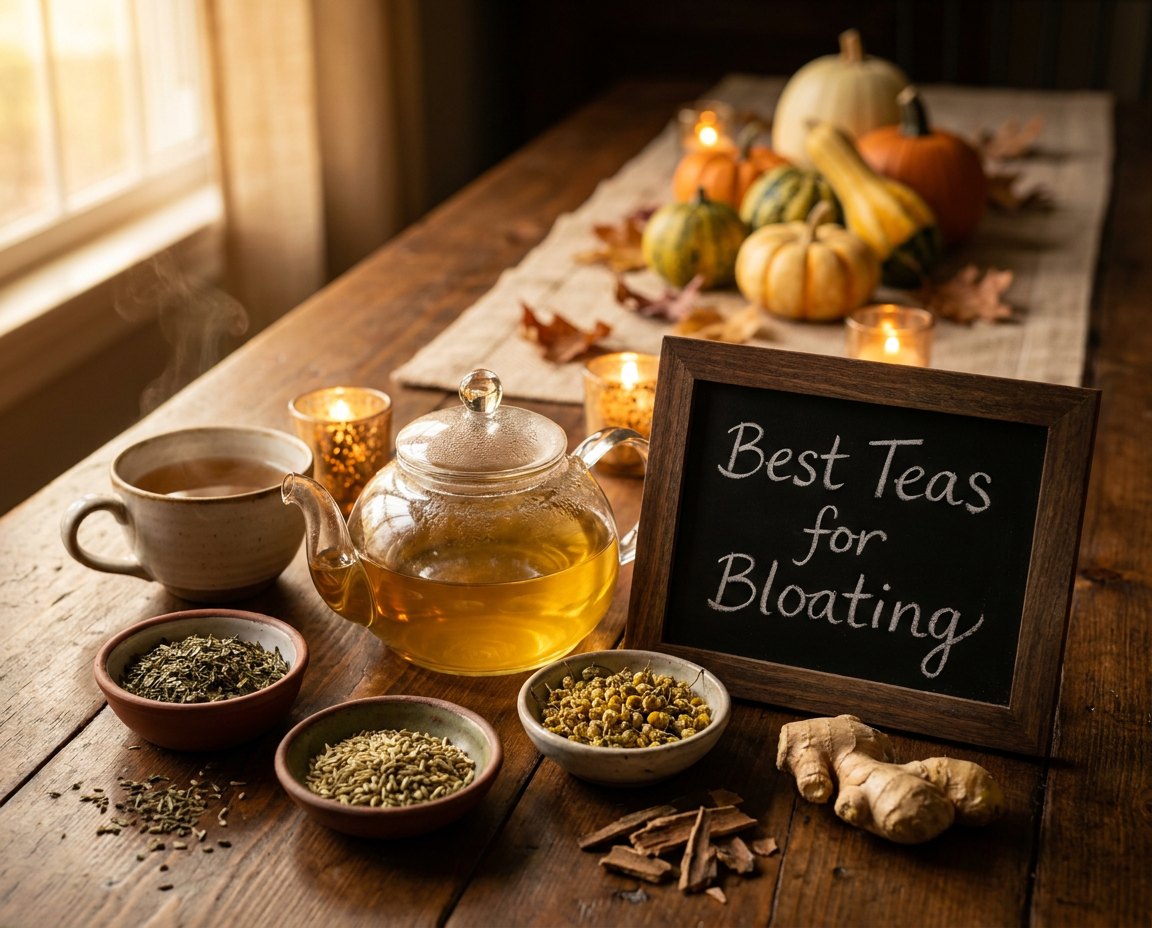
If you are wondering what tea helps with bloating, the classic choices are peppermint, fennel, ginger, and chamomile, with slippery elm as a soothing option for a touchy stomach. These herbs have long traditional use for gas, fullness, and digestive discomfort, and early research on several of them is encouraging. For occasional bloating after a big meal, a warm cup of one of these teas is a gentle, comforting place to start.
Bloating is an everyday complaint almost everyone knows. Here at The Leafy Source, customers from all over Winston-Salem and the Triad come in asking which tea to keep in the cabinet for exactly these moments.
With Thanksgiving right around the corner, the question gets even more popular. Here is our guide to the best teas for bloating, how to enjoy them after a big meal, and when to call your doctor instead of putting the kettle on.
Why Do We Get Bloated?
According to MedlinePlus, a swollen or bloated belly is usually caused by overeating rather than a serious illness. Other common causes include swallowing air, gas from high-fiber foods, lactose intolerance, irritable bowel syndrome, and hormonal shifts like premenstrual syndrome. Eating smaller meals, slowing down, and skipping carbonated drinks, gum, and straws can help too.
What Tea Helps With Bloating the Most?
There is no single best tea for everyone, because bloating has different causes. Peppermint and fennel are the two teas people reach for most often for gas and fullness. Ginger is a favorite when bloating comes with a queasy stomach. Chamomile is a calming, gentle choice, especially in the evening. Slippery elm is less of a gas remedy and more of a soothing, coating herb for an irritated digestive tract.
Peppermint vs Fennel Tea: Which Is Better for Bloating?
Peppermint vs fennel tea is a question we hear all the time, and both have a place. Peppermint is the most studied of the two, though mostly as enteric-coated peppermint oil capsules rather than tea. The NIH’s National Center for Complementary and Integrative Health notes that research suggests those capsules may help adults with IBS, and a 2021 American College of Gastroenterology guideline recommends peppermint oil for overall IBS symptom relief. Peppermint tea itself is a bright, cooling cup that many people love after dinner.
If you are prone to reflux, fennel or chamomile can be a softer choice.
Fennel seed has been used for generations for gas and fullness. The European Medicines Agency recognizes fennel for the relief of mild digestive complaints such as bloating and flatulence, based on long-standing traditional use. Lightly crush the seeds before steeping to release their sweet, licorice-like flavor.
Is Ginger Tea Good for Digestion?
Ginger tea for digestion has a long history in traditional use for indigestion and an upset stomach. According to the NIH, research suggests ginger may help with nausea and vomiting during pregnancy, and it remains a favorite warming tea for an unsettled stomach. Slice a little fresh root, simmer it for 10 minutes, and add honey or lemon to taste.
Can Chamomile and Slippery Elm Help a Bloated Stomach?
Chamomile is promoted for indigestion and has a gentle, relaxing reputation, and its soft, floral cup makes it a natural after-dinner choice. For evenings, our guide on what tea helps you sleep covers that side of chamomile.
Slippery elm for digestion is all about its mucilage, a gel-like substance that forms when the bark meets water. It has traditionally been used for digestive irritation and sore throats. Memorial Sloan Kettering notes that one small study found a formula containing slippery elm improved bowel habits in people with IBS, and research continues to grow. Many people stir the powder into warm water or tea, and since it coats the digestive tract, it is usually enjoyed apart from medications.
What Tea Should I Drink After a Big Holiday Meal?
We love Thanksgiving in the Triad as much as anyone: the turkey, the mac and cheese, and that second slice of pie. A warm tea after a big meal is one of the nicest little traditions you can add to the day.
A cup of fennel or peppermint is a classic choice once the plates are cleared. For anyone who prefers a softer cup, offer fennel, chamomile, or ginger. Later in the evening, chamomile is a lovely way to wind down. Pair your tea with a slow walk around the block, smaller second helpings, and plenty of water, and you will likely feel more comfortable. And if bloating is a regular visitor for you beyond the holidays, our post on the best herbs for IBS goes deeper.
When Should You See a Doctor About Bloating?
Occasional bloating after a heavy meal is normal. Bloating that keeps getting worse or does not go away is different. MedlinePlus advises contacting a provider if the swelling persists or worsens, comes with unexplained symptoms, your belly is tender to the touch, you have a high fever, you have severe diarrhea or bloody stools, or you cannot eat or drink for more than 6 to 8 hours. We would add unexplained weight loss to that list. Persistent bloating can occasionally signal conditions like ovarian cysts or a bowel blockage, so please do not try to tea your way through those symptoms.
At a Glance: Teas for Bloating
| Herb | Traditional use | Common forms | Good to know |
|---|---|---|---|
| Peppermint | Gas, fullness, IBS discomfort | Tea, enteric-coated oil capsules | Bright and cooling; a classic after-dinner cup |
| Fennel seed | Bloating and flatulence | Tea, whole seeds | Sweet, licorice-like flavor; lightly crush the seeds |
| Ginger | Nausea and upset stomach | Fresh root tea, capsules | Warm and spicy; lovely with honey or lemon |
| Chamomile | Indigestion and relaxation | Tea | Soft and floral; blends with peppermint or fennel |
| Slippery elm | Soothing digestive irritation | Powder, tea | Smooth, soothing texture; stir the powder into warm water |
Our Favorite Loose Herbs for a Happy Belly
If you like to brew your own, we carry several organic loose herbs that make a simple after-dinner tea. Our Organic Peppermint Leaf is bright and cooling, and our Organic Fennel Seed has a gentle, licorice-like sweetness.
For an evening cup, our Organic Chamomile is soft and floral, and it blends nicely with peppermint or fennel. Our Organic Slippery Elm Bark is a traditional choice for people who want something soothing. These herbs are traditional supports for occasional discomfort, not treatments for any digestive condition.
Where to Find Teas for Bloating in Winston-Salem
Visit The Leafy Source at 4838 Country Club Rd, Winston-Salem, NC 27104, and stock up before the holidays. Our team is happy to help you choose, or you can shop Organic Fennel Seed and our other loose herbs online.
Frequently Asked Questions About Tea for Bloating
Is peppermint or fennel tea better for gas?
Both are traditional choices. Peppermint has more research behind it, mostly as oil capsules for IBS, while fennel is recognized in Europe for bloating and flatulence based on long traditional use. Many people enjoy them together, since fennel’s sweetness softens peppermint’s cooling bite.
Can I blend teas for bloating?
Yes. Peppermint and fennel are a classic pairing, and chamomile adds a soft, floral note for the evening. Try a teaspoon of each, steeped together for 5 to 10 minutes. A few slices of fresh ginger warm up the blend, which makes it a cozy cup to pass around the table after a holiday meal.
How do I prepare slippery elm?
Stir a teaspoon or so of slippery elm powder into a cup of warm water or tea and let it sit for a minute to thicken. It forms a smooth, gentle gel with a mild taste, and many people add a little honey or cinnamon. Since it coats the digestive tract, enjoy it apart from any medications you take.
How many cups of tea for bloating can I drink a day?
Many people enjoy 1 to 3 cups of herbal tea a day, often after meals. A warm cup after your biggest meal of the day is a simple habit to start with. If you have questions about whether an herb is right for you, you can talk with your healthcare provider or with Kayla, the herbalist behind House of Serenity, who works one-on-one with clients.
When is bloating a sign of something serious?
See a doctor if bloating keeps getting worse or will not go away, or if it comes with belly tenderness, high fever, severe diarrhea, blood in your stool, unexplained weight loss, or trouble eating and drinking. These symptoms need a proper medical exam.
Sources
- MedlinePlus: Abdomen, swollen
- NCCIH: Peppermint Oil
- NCCIH: Ginger
- European Medicines Agency: Herbal monograph on bitter fennel fruit
Before starting any new herbal product or wellness routine, consult with a qualified healthcare professional, especially if you are pregnant, nursing, taking medications, or managing a medical condition.