
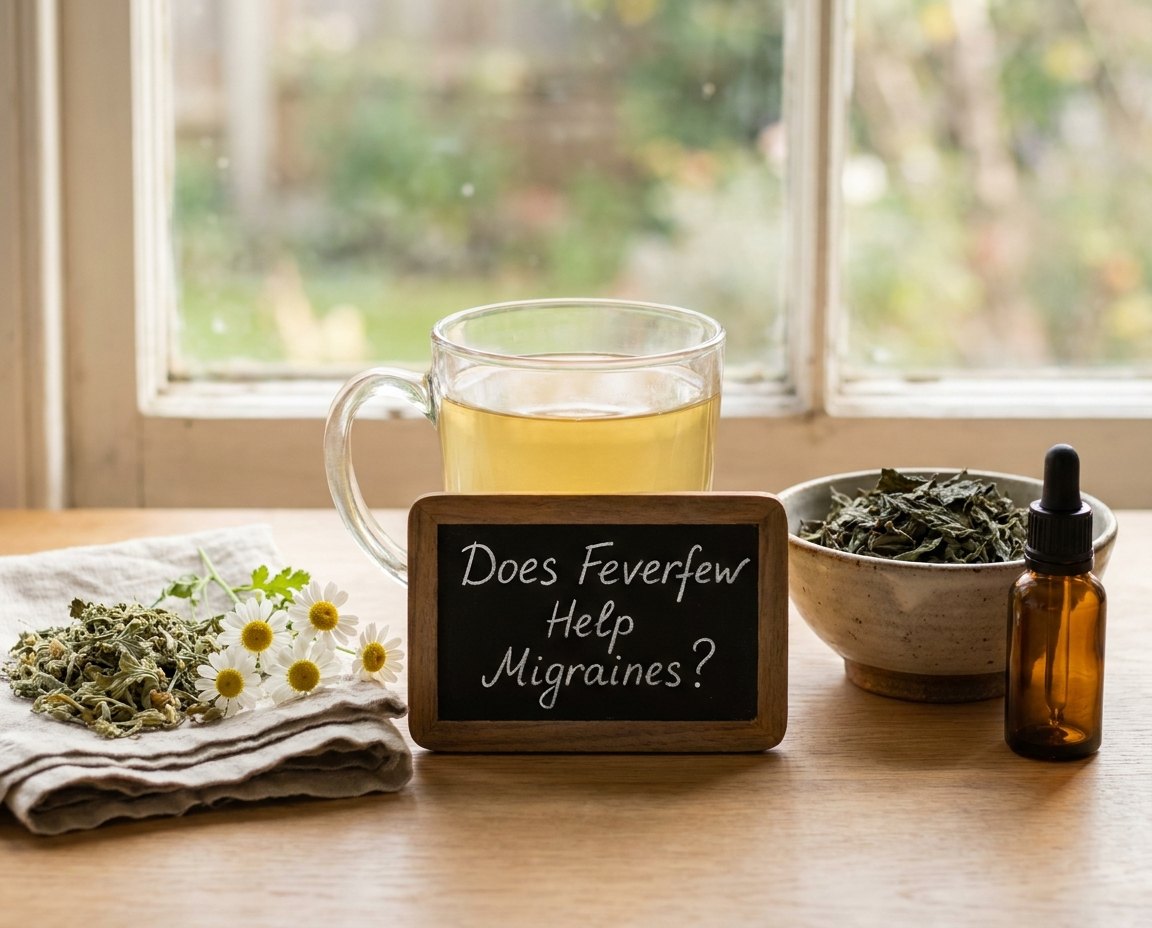
Does feverfew help migraines? Research suggests it may help some people have fewer migraines when taken regularly over time, and studies are still growing. Feverfew has been studied as a steady, long-term herb that people take as part of a daily routine.
Headaches are one of the most common reasons people stop by our shop on Country Club Road. Some folks have dealt with migraines for years, and others want a gentle first step for an everyday tension headache. Feverfew comes up in almost every one of those conversations, so here is what the research says, how people use it, and a few other natural headache remedies worth knowing.
What Is Feverfew?
Feverfew (Tanacetum parthenium) is a perennial plant with leaves a bit like chrysanthemum leaves and small daisy-like flowers. According to the National Center for Complementary and Integrative Health (NCCIH), it is native to parts of western Asia and the Balkans and now grows worldwide. Traditionally it was used for fever, menstrual troubles, earache, and digestive complaints. Today it is best known as a migraine herb. It is not the same plant as American feverfew (Parthenium integrifolium), so look for the Tanacetum parthenium name when you shop.
Does Feverfew Help Migraines? What the Research Says
NCCIH says some research suggests feverfew may help people have fewer migraines, and some studies found it may ease symptoms like pain, nausea, vomiting, and sensitivity to light and noise. Research is still growing, and studies so far have used different sources and amounts of feverfew, so scientists are still learning which forms fit best.
Just as important is how feverfew was studied. Researchers looked at it as something taken regularly over weeks and months to see whether migraines showed up less often. That is why people who enjoy feverfew tend to take it steadily rather than reaching for it in the moment. We think of it as a traditional herb with encouraging early research.
Good to Know About Feverfew
NCCIH reports no serious concerns in the research so far, and many people enjoy feverfew as part of a steady daily routine. If you are pregnant, nursing, taking medications, or have any concerns, you can talk with your healthcare provider or with Kayla, the herbalist behind House of Serenity, who works one-on-one with clients.
How to Use Feverfew
People use feverfew as a tea made from the dried leaves, in capsules, or as a tincture. Because studies used different preparations and amounts, there is no single amount we can point to as the right one. Follow the label on the product you choose. If you do try it, keep a simple headache journal noting how often headaches happen and how strong they are, so you can see whether anything changes over time.
What Other Natural Headache Remedies Do People Use?
Peppermint oil for headaches is one of the most popular ideas we hear about. NCCIH says a limited amount of evidence suggests peppermint oil applied to the skin might relieve tension headaches. Many people dilute it in a carrier oil and dab a little on the temples. Keep it away from your eyes, and save it for the grown-ups in the house.
Ginger is another favorite. In a small double-blind trial of 100 people with migraine, ginger powder and the prescription medicine sumatriptan were comparable at reducing headache severity two hours later. That is one study, and it is an encouraging one.
Two more names come up often, though they are nutrients rather than herbs. NCCIH notes riboflavin (vitamin B2) has been studied for migraines with encouraging results, and a 2018 review found magnesium possibly effective at reducing how often migraines happen, and NCCIH suggests working with a provider on magnesium. Steady sleep, regular meals, and enough water matter too. Our post on what tea helps you sleep has a few calming bedtime ideas.
When to Check In With a Doctor
Most headaches are everyday visitors, but a sudden, severe headache or one that feels very different from your usual pattern deserves medical care right away. If your headaches are new or changing, your doctor is a great partner for finding what helps.
Feverfew and Peppermint at a Glance
| Herb | Traditional use | Common forms | Good to know |
|---|---|---|---|
| Feverfew | Migraines, minor aches, fever | Dried leaf tea, capsules, tincture | Quite bitter; blends well with peppermint |
| Peppermint | Tension headaches (oil on skin), digestion (tea) | Leaf tea, diluted essential oil | Bright and cooling as tea or diluted oil |
| Ginger | Nausea, migraine discomfort | Tea, powder, fresh root | Warming and spicy, lovely with honey |
Feverfew and Peppermint From The Leafy Source
We carry Organic Feverfew as a loose dried herb that many people steep as a tea. It is quite bitter, so a little honey or a milder herb in the cup can help.
Our Organic Peppermint Leaf makes a bright, cooling tea that people enjoy any time of day, and it blends nicely with feverfew to soften that bitter edge. You will also find feverfew among the herbs in the House of Serenity Menstrual Prep Tincture, alongside red raspberry leaf, chamomile, ginger, and others. If you like a reference guide at home, the free House of Serenity ebook 30 Natural Remedies For Common Ailments is a nice place to start.
Where to Find Feverfew in Winston-Salem
Stop by The Leafy Source at 4838 Country Club Rd, Winston-Salem, NC 27104. Our team is happy to show you our loose herbs and talk through how people use them. You can also shop Organic Feverfew online anytime.
Frequently Asked Questions About Feverfew for Migraines
How long should I take feverfew?
Feverfew has been studied as a steady herb, taken regularly over weeks and months to see whether migraines happened less often. Many people take it daily and keep a simple headache journal so they can notice patterns over time. For relief in the moment, your doctor can talk through options that pair well with your routine.
What does feverfew tea taste like?
Feverfew tea is quite bitter, with a sharp, herbal edge. Many people soften it with a little honey or blend it with a milder herb like peppermint, which adds a bright, cooling note. Start with a small amount of dried leaf in your cup and adjust to taste until you find a blend you enjoy.
How should I store dried feverfew?
Keep dried feverfew in an airtight jar away from heat, light, and moisture, such as a cool pantry shelf. That helps the leaves keep their color and aroma. Label the jar with the date you opened it, and refresh your supply when the herb looks faded or loses its scent.
Can I blend feverfew with other herbs?
Yes. Feverfew pairs nicely with peppermint, which softens its bitter edge, and a slice of fresh ginger adds warmth. You will also find feverfew blended with red raspberry leaf, chamomile, ginger, and others in the House of Serenity Menstrual Prep Tincture. Blending is a simple way to make a daily cup more enjoyable.
Does peppermint oil help headaches?
NCCIH says a limited amount of evidence suggests peppermint oil applied to the skin might relieve tension headaches. People often dilute it and dab a little on the temples. Many people pair it with a few slow, deep breaths. Keep it away from the eyes, and save it for the grown-ups.
Sources
- NCCIH: Feverfew
- NCCIH: Headaches, What You Need To Know
- Memorial Sloan Kettering Cancer Center: Feverfew
- NCCIH: Peppermint Oil
Before starting any new herbal product or wellness routine, consult with a qualified healthcare professional, especially if you are pregnant, nursing, taking medications, or managing a medical condition.