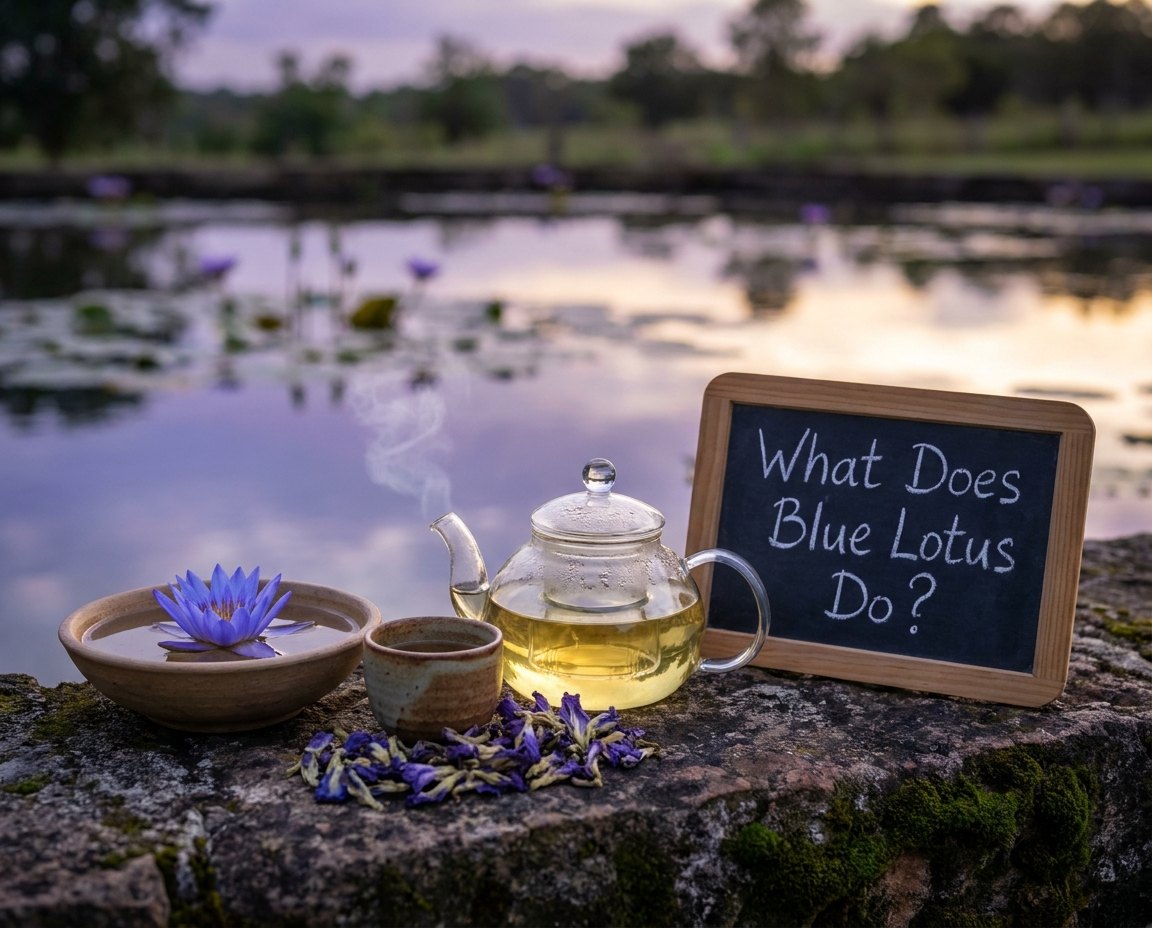
So, what does blue lotus do? Blue lotus (Nymphaea caerulea) is a water lily that people have used for thousands of years for gentle relaxation, and today most people sip it as a tea and describe a calm, mellow, slightly dreamy feeling. Its effects are usually linked to plant compounds called aporphine alkaloids, and much of what we know comes from its long history, lab work, and the experiences people share.
Blue lotus is one of the most talked-about botanicals we carry at The Leafy Source. Customers ask what it is, how to brew it, and whether it is legal. Let’s walk through the history, the science, and how to enjoy it.
What Does Blue Lotus Do?
People reach for blue lotus mostly as a wind-down ritual. The most common reports are a sense of calm, mild physical relaxation, a lifted or easygoing mood, and a soft, dreamy quality that some people enjoy in the evening. Experiences vary from person to person, which is part of what makes it such an interesting botanical.
Research in people is still growing, and we think of blue lotus as a traditional relaxation botanical with a fascinating history.
A Flower With Ancient Egyptian Roots
Blue lotus is sometimes called the Egyptian lotus, and for good reason. Images of the flower appear on Egyptian papyri and tomb art dating back to around the 14th century B.C. Researchers believe it played a role in ritual, ceremony, and healing practices.
Modern users often recommend steeping the flower in wine, and there may be a chemistry reason: the alkaloids in blue lotus are not very water soluble, so alcohol may pull out more of them than plain water. Today, people use the dried flowers in three main ways: brewed as tea, soaked in wine or made into a tincture, and blended into herbal smoke mixtures.
What Compounds Are in Blue Lotus?
The two compounds you will see named most often are apomorphine and nuciferine. Apomorphine acts on dopamine receptors and is used as a prescription medicine for Parkinson’s disease. Nuciferine acts on certain serotonin and dopamine receptors and has been studied mostly in animals. These two are usually credited with blue lotus’s relaxing reputation.
Lab analyses show that the levels of these compounds can vary from batch to batch, and researchers are still mapping out how much a cup of tea delivers. That natural variety is one reason many people start with a small cup and see how they feel.
Blue Lotus Tea Effects and How to Make Blue Lotus Tea
Tea is the gentlest and most popular way to enjoy blue lotus. To make blue lotus tea, place a small handful of dried flowers, about 3 to 5 flowers or 1 to 2 grams, in a mug or teapot. Pour hot water just off the boil over the flowers, cover, and let it steep for 10 to 15 minutes. Strain and sip slowly. The flavor is mild, floral, and slightly earthy, and a little honey or lemon can round it out.
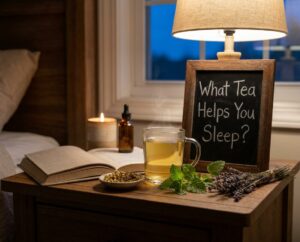
Start small, ideally on a quiet evening at home. Blue lotus tea effects are usually described as subtle: a relaxed body and a quieter mind. If you enjoy calming evening cups, our post on what tea helps you sleep covers more caffeine-free options worth exploring.
Blue Lotus vs Lotus: Are They the Same Plant?
No, and this trips up a lot of people. Blue lotus (Nymphaea caerulea) is technically a water lily. The sacred lotus (Nelumbo nucifera), the pink or white lotus seen in Asian art and cuisine, belongs to a completely different plant family, and its roots and seeds are common foods. Sacred lotus contains nuciferine too, which adds to the confusion, but when someone says “blue lotus,” they mean the Egyptian water lily.
Is Blue Lotus Legal?
At the federal level, blue lotus is not a controlled substance in the United States. It is also not approved by the FDA as a food or drug for human consumption, which is why you will usually see it sold as a botanical rather than as a supplement with health claims. That is how we carry it at The Leafy Source.
State laws are a different story. Louisiana lists Nymphaea caerulea, along with sacred lotus and several other herbs, as a prohibited plant under state law (R.S. 40:989.2). The law bans these plants in products meant to be placed in the mouth or nose, with limited exceptions, including growing the plant strictly for decorative or landscaping purposes. Laws change, so if you live outside North Carolina or travel with botanicals, check your own state’s rules.
Good to Know
Blue lotus is enjoyed by many people as a slow, relaxing evening ritual, and a simple cup of tea on a quiet night at home is the classic way to enjoy it. If you are pregnant, nursing, taking medications, or have any questions about whether an herb is right for you, you can talk with your healthcare provider or with Kayla, the herbalist behind House of Serenity, who works one-on-one with clients.
Blue Lotus At a Glance
| Herb | Traditional use | Common forms | Good to know |
|---|---|---|---|
| Blue lotus (Nymphaea caerulea) | Relaxation, ritual, evening wind-down | Tea, wine infusion, tincture, smoke blends | Mild, floral, slightly earthy flavor; best enjoyed on a quiet evening at home |
| Chamomile | Calm evenings, digestion | Tea, tincture | Soft, apple-like flavor; pairs nicely with blue lotus in the same pot |
Shop Blue Lotus at The Leafy Source
Our Blue Lotus Flower (Nymphaea caerulea) is the dried flower, sold as a botanical. Many of our customers enjoy it as a slow evening tea ritual. If you would rather keep things simple, our Organic Chamomile is a classic, well-loved calming tea and pairs nicely with blue lotus in the same pot for a floral evening blend. For more gentle options, see our top 5 herbs for relaxing.
Where to Find Blue Lotus in Winston-Salem
You can find blue lotus at The Leafy Source, 4838 Country Club Rd, Winston-Salem, NC 27104. Our team is always happy to answer questions and share brewing tips, or you can order Blue Lotus Flower online anytime.
Frequently Asked Questions About Blue Lotus
Does blue lotus get you high?
Most people describe blue lotus as mildly relaxing and dreamy rather than intoxicating. Effects vary from person to person, and the levels of its natural compounds can vary from batch to batch. Start with a small cup on a quiet evening at home, and see how you feel before enjoying more.
How long do blue lotus tea effects last?
People commonly report a gentle, relaxed feeling that builds within the first hour and fades over a few hours. Your experience will depend on how much you use, how long you steep it, and your own body, so plan for a quiet evening.
What does blue lotus tea taste like?
Blue lotus tea has a mild, floral, slightly earthy flavor. Many people add a little honey or lemon to round it out, or steep it with chamomile for a gentle floral evening blend. It is a cup made for sipping slowly, which is part of the ritual people love about it.
Is blue lotus legal in North Carolina?
Blue lotus is not federally controlled, and we are not aware of any North Carolina law that bans it. It is also not approved by the FDA as a food or drug, so it is sold as a botanical. Louisiana restricts it, and laws can change, so check your state’s current rules if you live elsewhere.
How should I store blue lotus flowers?
Keep dried blue lotus flowers in an airtight container, such as a glass jar, away from heat, light, and moisture. A cool cupboard works well. Stored this way, the flowers keep their delicate floral aroma longer, so every cup tastes fresh. Whole flowers also hold up better than crushed ones, so crumble them right before brewing.
Sources
- Poklis et al., Analysis of Blue Lotus Resin and Products, Journal of Psychoactive Drugs (PMC)
- Chemical Composition, Market Survey, and Safety Assessment of Blue Lotus Extracts, Molecules (PMC)
- Louisiana State Legislature: R.S. 40:989.2, Prohibited Plant Products
- NCCIH: Chamomile
Before starting any new herbal product or wellness routine, consult with a qualified healthcare professional, especially if you are pregnant, nursing, taking medications, or managing a medical condition.